
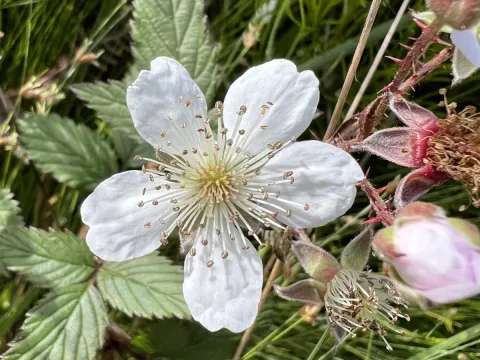
Rubus affinis
Rubus affinis
Rubus affinis, commonly known as a type of fold-leaved blackberry, is a perennial shrub belonging to the Rosaceae family. It is recognized by its robust, arching canes covered in hooked prickles and its distinctive pleated leaves which give the plant its specific scientific designation.
What the section contains
Rubus affinis
Native to Western and Central Europe, this plant thrives in hedgerows, forest margins, and open woodlands. It requires fertile, well-draining soil with a pH level ranging from slightly acidic to neutral to ensure optimal nutrient uptake and vigorous vegetative growth.
The climate requirements for this species include exposure to moderate sunlight and protection from harsh, drying winds. It performs best in temperate zones where summers are warm enough to support fruit ripening and winters are not excessively severe for the dormant canes.
In agricultural practice, this plant is cultivated for its edible berries which are highly valued in the production of preserves, syrups, and fresh fruit markets. The plant's foliage is also valued in traditional herbal medicine for its astringent properties due to high tannin content.
Standard agrotechnical management involves training the canes along trellises to facilitate air circulation and easier harvesting. Regular pruning is essential to remove spent canes, stimulate new growth for the following season, and maintain the general health of the blackberry thicket.
The plant is susceptible to fungal diseases such as cane blight and grey mold, especially during seasons with high humidity. Proper spatial management and pruning help to reduce moisture trapped within the foliage, which is the primary preventive measure against these pathogens.
Pest pressures often come from mites and aphids, which feed on the sap of young shoots. Implementing an integrated pest management strategy, including the introduction of natural predators, helps to keep these populations under control without heavy reliance on synthetic pesticides.
Harvesting usually occurs throughout mid-to-late summer when the berries turn a deep, glossy black and soften slightly. It is recommended to perform manual picking during the cooler morning hours to ensure the best quality and shelf life of the fruit.
Due to the thorny nature of the canes, operators should wear protective gloves during the harvest. Careful handling is necessary to prevent bruising, as the berries are highly perishable and should be processed or refrigerated shortly after picking to maintain their integrity.