
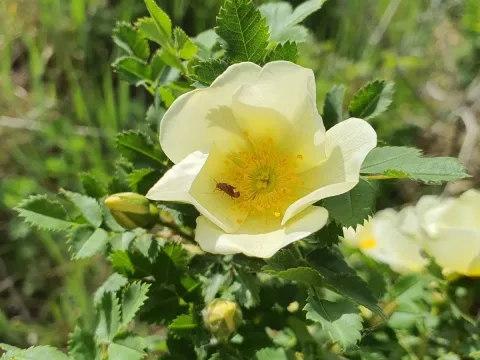
Rosa xanthina
Rosa xanthina
Rosa xanthina, commonly known as the Manchu rose, is a deciduous shrub belonging to the Rosaceae family. Native to Northern China and Korea, this species is highly valued for its vigor and early, bright yellow blossoms that appear in spring.
What the section contains
Rosa xanthina
This shrub thrives in full sun exposure. While it exhibits some tolerance to light shade, optimal flowering intensity and plant health are achieved when planted in locations receiving at least six to eight hours of direct sunlight daily.
The ideal soil conditions for Rosa xanthina include well-drained loamy soils. It is remarkably adaptable and can grow in various soil types, provided that waterlogging is prevented through effective drainage solutions.
Climatic requirements are relatively modest as the plant is hardy and adapted to temperate climates. Once established, the shrub displays significant drought resistance, reducing the need for frequent supplemental irrigation.
Horticultural maintenance focuses on annual pruning to ensure vigor. Removing dead or congested wood encourages new growth, which in turn leads to a more profuse flowering display in the following season.
The primary health threats for Rosa xanthina include fungal diseases such as black spot and powdery mildew. These are most prevalent in humid environments where air circulation is restricted around the foliage.
Common insect pests include aphids and spider mites. These pests typically congregate on new, tender shoots and can cause leaf curling or stunted development if left unmonitored during the growing period.
Cultural control remains the most effective strategy. By ensuring adequate spacing between individual plants, gardeners can maintain proper airflow, which significantly inhibits the development of fungal spores.
Integrated pest management involves monitoring for early signs of infestation and using biological or chemical interventions only when necessary. Often, manual removal or simple soap-based sprays suffice.
Winter care is minimal due to the species' inherent cold tolerance. However, providing a layer of mulch around the base helps stabilize soil temperatures and retains moisture for the root system.