
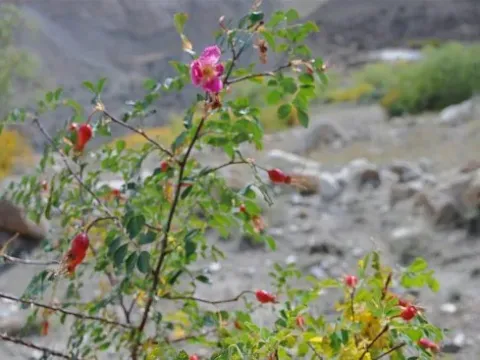
Webb's Rose
Rosa webbiana
Webb's Rose (Rosa webbiana) is a deciduous shrub belonging to the Rosaceae family. It is native to the mountainous regions of the Himalayas and Central Asia, where it thrives in challenging, rugged environments.
What the section contains
Webb's Rose
This species is well-regarded for its high cold tolerance and adaptation to extreme temperature fluctuations. To flourish, it requires a site with full sun exposure, which ensures the development of its characteristic delicate pink flowers.
The plant performs best in well-drained, sandy or loamy soils. It is critical to avoid waterlogged areas, as the root system of Rosa webbiana is susceptible to decay if exposed to excessive moisture for prolonged periods.
Cultivation practices involve minimal maintenance; a yearly pruning in late winter or early spring helps maintain the shrub's shape and encourages vigorous new growth. It is relatively drought-tolerant once established and does not require frequent irrigation.
Economically and horticulturally, it is utilized as an ornamental plant in rock gardens or as a hardy shrub for wild-style landscapes. The hips are also recognized for their nutritional value and potential use in herbal preparations.
The primary threats to Rosa webbiana include fungal pathogens such as powdery mildew, especially in humid or poorly ventilated locations.
Common insect pests include aphids and sawfly larvae, which can damage tender foliage and flower buds if populations are left uncontrolled.
Integrated pest management, including regular monitoring and the removal of infested plant parts, is the most effective approach for amateur growers.
Maintaining proper spacing and ensuring excellent air circulation around the shrub serves as a primary preventative measure against disease outbreaks.
While the species is hardy, protecting young plants from severe infestations during their first year is crucial for long-term health and vitality.