
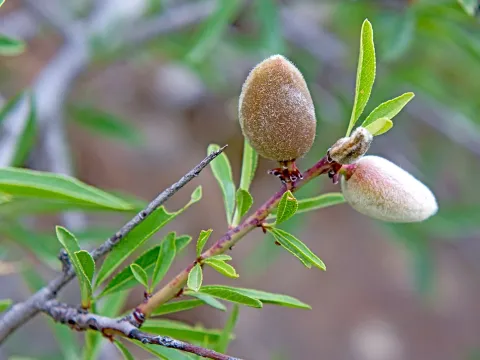
Webb's almond
Prunus webbii
Webb's almond (Prunus webbii) is a deciduous shrub or small tree belonging to the Rosaceae family. It is native to the regions of Southeastern Europe and Asia Minor, often found in rocky, arid habitats.
What the section contains
Webb's almond
This species is recognized for its exceptional drought tolerance, allowing it to thrive in environments where water is scarce. Its extensive root system enables it to access deep soil moisture during the heat of summer.
The plant thrives in full sun, as it requires high light intensity to maintain vigorous growth and produce quality flowers. It is highly adaptable to poor, rocky, and calcareous soils where fertility is limited.
Proper soil drainage is the most critical requirement for Webb's almond, as it cannot tolerate waterlogged conditions which often lead to root decay and fungal pathogens.
Economically, it is valued as a hardy rootstock for commercial almond varieties, enhancing their drought resistance, and as an ornamental plant in xeriscaping projects.
Shot-hole disease (Stigmina carpophila) is a common fungal issue that affects the foliage, causing holes in leaves and weakening the overall health of the tree.
Blossom blight and brown rot, caused by Monilinia species, represent significant threats during wet spring weather, potentially destroying the flower crop before fruit set.
The almond seed wasp and almond fruit moth are among the most destructive pests that damage the kernels, making early detection and intervention essential for yield protection.
Aphids can also cause stress to the plant by feeding on tender sap, which can lead to leaf curling and the development of sooty mold due to honeydew secretion.
Effective management involves maintaining tree hygiene by removing infected twigs and utilizing integrated pest management strategies to minimize chemical usage.