
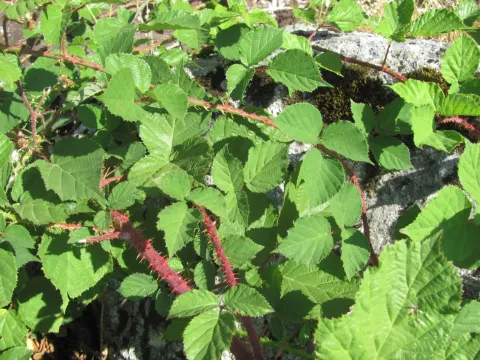
Wandering blackberry
Rubus vagabundus
Wandering blackberry (Rubus vagabundus) belongs to the Rosaceae family. It is a perennial shrub recognized for its resilient nature and adaptability to diverse environmental conditions, allowing it to thrive in varied habitats.
What the section contains
Wandering blackberry
The crop requires well-drained, fertile soil, ideally with a neutral to slightly acidic pH. Consistent moisture supply during the growing season is crucial for the development of high-quality berries and vigorous cane growth.
Optimal site selection involves choosing locations with full sun exposure, although the plant displays a degree of tolerance to partial shade. Protection from strong, desiccating winds is beneficial for maintaining plant health.
Standard agronomic practices include systematic pruning to remove old canes and encourage the growth of new fruiting wood. Mulching the root zone helps conserve soil moisture and suppresses weed competition effectively.
Commercially, this species is valued for its unique fruit profile, which is utilized in both fresh markets and food processing industries, as well as for its potential utility in breeding for hardiness.
The primary threats to Rubus vagabundus are fungal infections, such as cane blight and botrytis, which can compromise plant vitality if ventilation within the plantation is poor.
Common insect pests include mites and various leaf-feeding larvae, which require careful monitoring and the application of targeted pest management strategies to ensure consistent yields throughout the harvest period.