
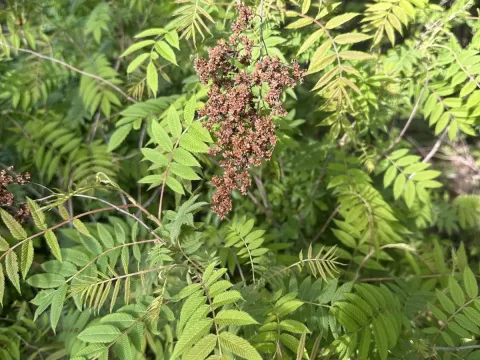
Sorbaria
Sorbaria (Ser. ex DC.) A.Braun
Sorbaria is a genus of deciduous shrubs belonging to the family Rosaceae. The plant is commonly known for its foliage, which resembles that of the rowan tree, hence the name. Its native range covers large parts of East Asia, including Siberia, Japan, and China.
What the section contains

Sorbaria
Botanically, it is a vigorous shrub that can grow between 2 to 3 meters in height. The plant is characterized by its ability to spread rapidly via suckers, forming dense thickets. Its main decorative appeal lies in its feathery leaves and large, plume-like white inflorescences that bloom in mid-summer.
The cultural requirements for Sorbaria include moist, nutrient-rich soil and a preference for sunny or partially shaded locations. The plant is remarkably hardy and can withstand very cold winter temperatures, making it a reliable choice for gardens in northern climates.
Basic agronomy involves consistent irrigation, as the plant suffers if the soil dries out completely. It also requires regular pruning to maintain its size and vigor, as it is a prolific grower that can easily dominate small spaces if not managed properly.
In terms of practical use, Sorbaria is primarily an ornamental shrub. It is frequently employed in landscaping to create informal hedges, erosion control on slopes, and as a fast-growing screen to hide less attractive parts of a garden plot.
Although robust, Sorbaria can be susceptible to several diseases and pests. Fungal infections, particularly various types of leaf spot, are common in environments with high humidity and poor air circulation within the shrub canopy.
Among the pests, aphids are the most significant threat, often colonizing the tender new growth during the spring months. Spider mites can also become a problem during periods of intense heat and drought, causing yellowing and premature leaf drop.
Prevention involves ensuring proper spacing between plants to facilitate airflow. Keeping the area free of debris and fallen leaves at the end of the season helps to reduce the inoculum load of soil-borne fungi.
Chemical control measures should be applied as soon as the first signs of infestation appear. Regular inspection of the plant, especially the undersides of leaves and growing tips, is essential for early detection.
Providing balanced fertilization and maintaining optimal soil moisture levels helps the shrub develop a strong immune system, allowing it to better withstand environmental stresses and potential pathogen attacks.