
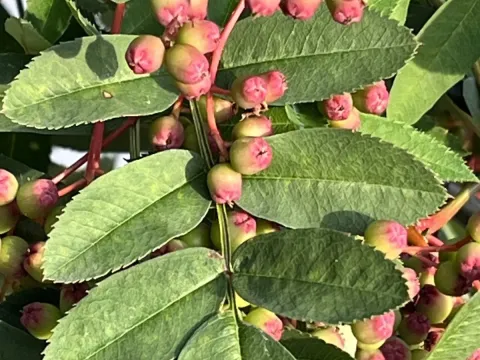
Sorbaronia
Sorbus x Aronia
Sorbaronia (Sorbus × Aronia) is a prominent intergeneric hybrid resulting from a cross between Sorbus aucuparia and Aronia melanocarpa. Belonging to the Rosaceae family, this plant typically manifests as a hardy deciduous shrub or a small tree that combines the genetic vigor of both parent species.
What the section contains
Sorbaronia
The crop thrives in temperate climate zones, demonstrating exceptional cold tolerance that makes it a reliable choice for regions with long, harsh winters. It requires a sunny location to ensure optimal fruit ripening and sugar accumulation. Full exposure to sunlight also promotes vigorous branch development and healthier leaf structure.
Regarding soil requirements, Sorbaronia prefers deep, well-draining loamy soils with a slightly acidic to neutral pH level. While the plant is relatively adaptable, it performs best when the soil is enriched with organic matter. Proper soil aeration is critical, as stagnant water in the root zone can hinder growth and invite pathogens.
Standard horticultural practices for Sorbaronia include consistent irrigation during dry spells, especially throughout the fruit-setting stage. Applying organic mulch around the base helps retain soil moisture and prevents competition from weeds. Strategic pruning is essential to maintain a productive canopy and promote the circulation of air within the plant.
The fruit of the Sorbaronia is highly valued in the culinary and nutraceutical industries. It offers a balanced flavor profile, significantly less astringent than standard chokeberry. Rich in vitamins, minerals, and polyphenols, the berries are commonly processed into juices, jellies, and dietary supplements aimed at enhancing immune health.
Like many members of the Rosaceae family, Sorbaronia can be susceptible to various pests, including aphids, mites, and leaf-mining insects. Integrated pest management strategies, such as attracting beneficial insects to the garden and using horticultural oils, can effectively mitigate these infestations without causing harm to the environment.
Fungal diseases, including scab and various leaf spot pathogens, represent the most significant threat to the plant's health. Maintaining good plant hygiene by removing fallen leaves and ensuring that the shrub is not overcrowded is the primary defense. In severe cases, preventive applications of copper-based fungicides may be necessary.