
Koehne rowan
Sorbus koehneana
Description
Growing requirements
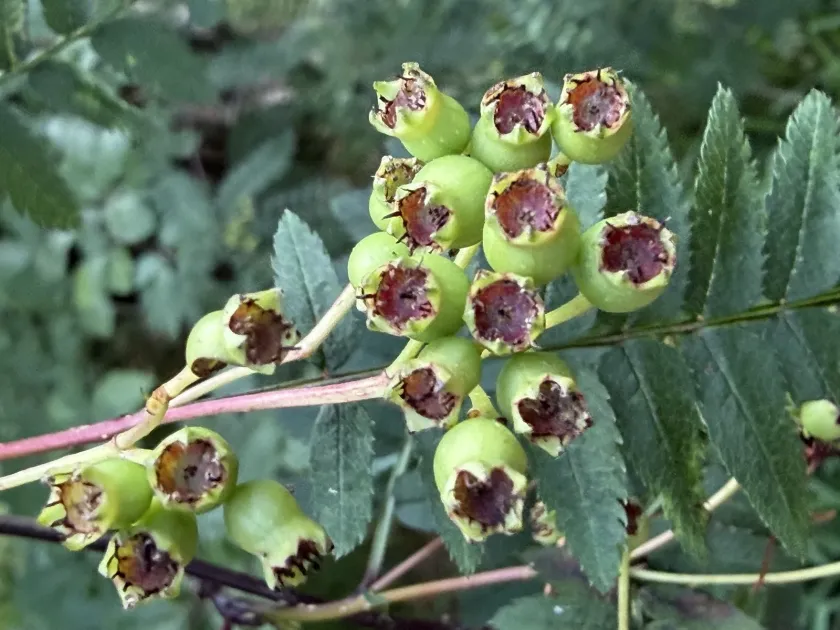
Koehne rowan (Sorbus koehneana) is a deciduous shrub member of the Rosaceae family. Native to the mountainous regions of Western and Central China, it is prized for its elegant form and persistent white fruit.
The plant thrives in full sun or partial shade, requiring a site with good air circulation to maintain its health. It is relatively hardy, though it performs best in regions with moderate climate conditions.
Regarding soil requirements, it prefers well-drained, fertile, slightly acidic to neutral soils. It is intolerant of waterlogged conditions, which can lead to rapid root decay and decline of the plant.
Agrotechnical practices involve regular application of slow-release fertilizers in early spring and maintaining a layer of organic mulch around the base to preserve moisture and suppress weeds.
In landscaping, this species serves as a focal point due to its compound foliage and clusters of translucent white berries. It is frequently used in mixed shrub borders and as an ornamental specimen.
Main diseases and pests
Powdery mildew and rust are the most common fungal diseases affecting this species. Proper spacing and avoiding overhead watering are essential cultural practices to reduce the incidence of these pathogens.
Pests such as aphids and leaf-mining insects may target the tender foliage during the growth season. Integrated pest management, including the use of neem oil or insecticidal soaps, is recommended.
Rodent damage to the bark during the winter can be severe, especially for young specimens. Applying physical barriers like wire mesh around the trunk is a necessary protection strategy.
Nutrient deficiencies, particularly iron or magnesium, can result in leaf chlorosis. Soil testing is advised before any corrective fertilization to ensure optimal nutrient balance for the shrub.
Root rot caused by Phytophthora species is a serious threat in heavy, poorly drained soils. Ensuring proper drainage at the time of planting is the most effective way to prevent this issue.