
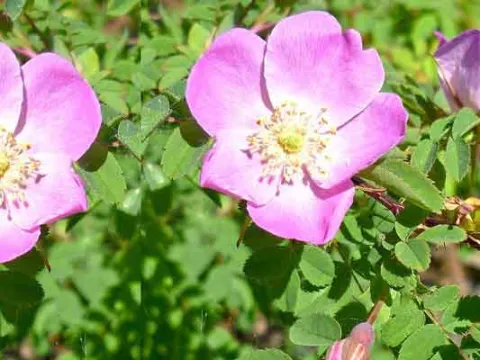
Korean rose
Rosa koreana
The Korean rose (Rosa koreana) belongs to the Rosaceae family and is native to the Korean Peninsula and surrounding Asian regions. It is a deciduous shrub known for its rugged growth habit.
What the section contains
Korean rose
Botanically, this species is characterized by its distinctively serrated leaves and small, single flowers that bloom in early summer, often followed by modest, colorful hips in autumn.
This rose requires well-drained, slightly acidic soil to thrive. It performs best in sites with full sun exposure, although it can tolerate partial shade in hotter climates.
Agrotechnical practices involve providing consistent moisture during the growing season while ensuring that the soil does not become waterlogged, which is detrimental to the roots.
The plant is highly valued for its cold tolerance, making it an excellent choice for ornamental gardening in regions with harsh winters where other rose species fail.
Common diseases affecting this species include powdery mildew and black spot, especially in environments with poor air circulation or high atmospheric humidity.
Pests such as aphids and spider mites are frequent invaders that target the tender terminal growth, requiring proactive management to maintain plant vigor.
Preventive maintenance involves pruning dead or diseased wood to promote airflow, which significantly reduces the incidence of fungal outbreaks within the shrub canopy.
Regular monitoring of foliage is essential to detect pest infestations early before they reach levels that necessitate chemical control measures.
Using mulch around the base of the plant helps retain moisture while also acting as a physical barrier against soil-borne pathogens that might splash onto the leaves.