
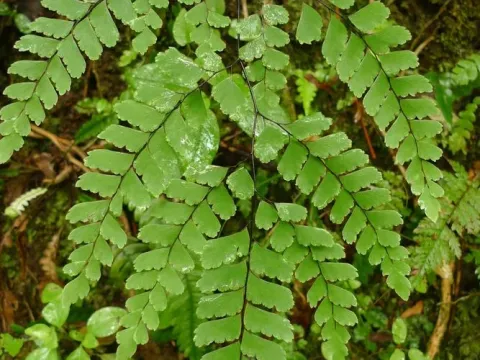
Cunningham's Maidenhair
Adiantum cunninghami
Cunningham's Maidenhair (Adiantum cunninghami) is a distinguished member of the Pteridaceae family, native to the temperate rainforests of New Zealand. This fern species is valued primarily for its delicate, dark-stiped fronds and graceful architecture.
What the section contains
Cunningham's Maidenhair
The crop thrives in a narrow climatic window. It requires consistent temperatures between 18°C and 22°C. Avoiding thermal shock is essential, as the species is highly intolerant to sudden cold drafts or extreme heat spikes.
Humidity management is the cornerstone of its agronomy. Maintaining relative humidity levels above 65% is non-negotiable. Industrial greenhouses utilize ultrasonic humidifiers or misting systems to mimic its natural humid forest habitat.
Soil requirements focus on high organic matter content and excellent permeability. A blend of sphagnum peat, pine bark, and coarse perlite provides the necessary structure to prevent compaction while retaining sufficient moisture.
The plant demonstrates a high sensitivity to light quality. It performs best under filtered light or dappled shade. Direct sunlight exposure causes rapid chlorosis and tissue burning on the fragile pinnae of the fronds.
Spider mites are the most prevalent pest, especially in environments where humidity levels are allowed to drop below the optimal threshold for extended periods.
Mealybugs can be problematic, often colonizing the crown area and the base of the petioles, requiring careful mechanical removal or systemic insecticide application.
Root rot, primarily caused by Phytophthora species, remains the most significant physiological threat when substrate drainage is compromised or watering frequency is excessive.
Leaf spot diseases can occur if water remains on the fronds for too long during evening hours, which promotes the growth of pathogenic bacteria and fungi.
Strict hygiene protocols, including the sterilization of propagation trays and the use of sterile growing media, are essential to prevent the spread of soil-borne pathogens.