
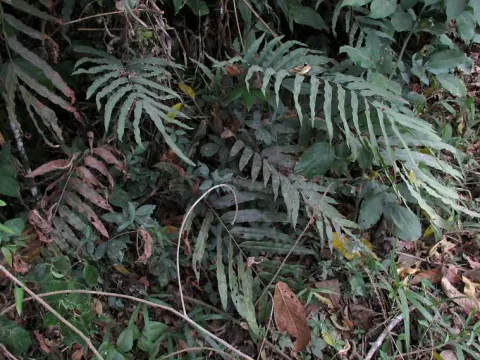
Giant brake
Pteris grandifolia
Pteris grandifolia, commonly known as the giant brake, is a perennial fern species within the Pteridaceae family. Originating from tropical American regions, it thrives in warm, humid, and shaded environments, often found in lush understories.
What the section contains
Giant brake
The plant is botanically distinguished by its large, pinnate fronds that can grow quite tall. These fronds provide a distinct architectural appeal, making it a popular choice for both interior decorative use and botanical collections.
Success in cultivation requires high atmospheric humidity and protection from direct sunlight. Exposure to harsh solar rays can cause the leaves to scorch and lose their characteristic deep green pigmentation.
The soil should be a loose, well-draining mix rich in organic matter. Maintaining a consistent moisture level is crucial; however, waterlogging must be avoided to prevent damage to the delicate root system.
Ideal temperatures range between 18°C and 24°C throughout the growing season. The plant is sensitive to temperature fluctuations and cold drafts, which may cause the tips of the fronds to wither prematurely.
Spider mites are the most common pest, particularly when the indoor environment lacks sufficient humidity. These small pests can multiply rapidly, causing stippling and webbing on the foliage.
Scale insects present a significant threat by attaching to the stems and fronds to feed on plant sap. Their presence often leads to stunted growth and the development of sooty mold due to honeydew secretion.
Fungal pathogens such as root rot frequently occur in overwatered conditions where soil aeration is poor. This often results in the blackening of the base of the plant and subsequent wilting of the fronds.
Powdery mildew can affect the leaves if there is insufficient air circulation combined with high humidity. This fungus leaves a dusty white appearance on the surface of the fronds, affecting photosynthesis.
Effective management involves consistent sanitation and the use of appropriate pesticides or fungicides as needed. Ensuring proper drainage and moderate irrigation cycles are the primary preventative measures against disease.