
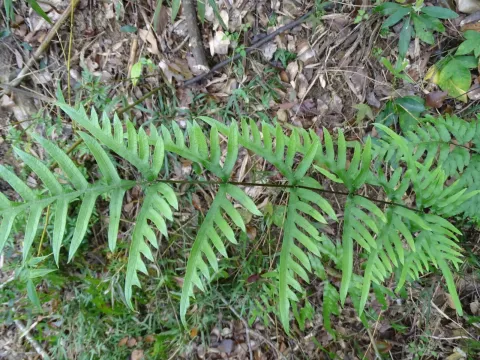
Chinese brake fern
Pteris semipinnata
Pteris semipinnata, commonly known as the Chinese brake fern, belongs to the Pteridaceae family. It is a perennial plant native to subtropical regions of Asia, primarily found in forests where it thrives in shaded, humid environments.
What the section contains
Chinese brake fern
Cultivation requires stable environmental conditions, specifically avoiding direct sunlight which causes foliage necrosis. The plant performs best in a shaded environment with high ambient humidity, ideally maintained above 70% in controlled greenhouse settings.
The ideal growing medium is a well-draining, humus-rich soil mixture with a slightly acidic pH. Proper drainage is essential to prevent waterlogging, as the rhizomes of the plant are highly susceptible to decay in stagnant, water-saturated substrates.
Standard agronomic practices for this fern include maintaining consistent soil moisture and providing protection against sudden temperature drops. Temperatures should generally stay between 18°C and 25°C for optimal growth rates during the vegetative phase.
The plant has significant cultural and economic value in Asian regions, where it is harvested for traditional medicinal purposes. Its pharmacological potential, including antioxidant and anti-inflammatory properties, makes it a subject of ongoing botanical research.
Typical pests affecting Pteris semipinnata include spider mites and scale insects. These pests often thrive in environments with low humidity, necessitating careful monitoring of microclimate parameters to minimize outbreaks.
Fungal pathogens such as root rot and leaf spot are common threats to this species. Preventive measures include ensuring good air circulation around the plants and avoiding overhead irrigation that leaves water on the foliage for extended periods.