
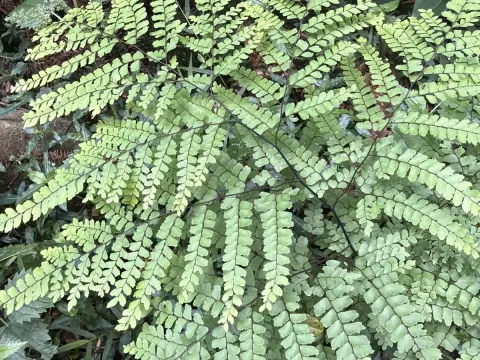
Giant maidenhair
Adiantum formosum
Giant maidenhair, or Adiantum formosum, is a robust fern belonging to the Pteridaceae family. Native to the forested regions of Australia, it is widely recognized for its delicate, triangular fronds and spreading rhizome system.
What the section contains
Giant maidenhair
This crop requires consistent temperatures ranging between 18 and 24 degrees Celsius. It thrives in locations protected from drafts and temperature fluctuations, which can cause significant stress to the fragile leaf segments.
The soil should be a well-draining, peat-based mix with a slightly acidic pH. Proper structure is essential to prevent waterlogging, as the roots require a balance of moisture and aeration to remain healthy throughout the growth period.
High relative humidity, ideally above 60 percent, is a non-negotiable requirement for this species. In cultivation environments, consistent humidity levels prevent the edges of the fronds from turning brown and curling.
Light levels must be managed carefully; bright, indirect sunlight is preferred. Exposure to direct sunlight will scorch the fronds, whereas deep shade may result in weak, stunted growth and loss of natural foliage density.
Root rot is the most common pathology affecting Adiantum formosum, typically caused by overwatering or poor drainage systems. This fungal threat can decimate the root system if not addressed quickly.
Common pests include scale insects and mealybugs, which tend to hide in the dense foliage. These pests sap nutrients from the plant, leading to stunted growth and the potential for secondary fungal infections.
Spider mites are a recurring issue in drier conditions. Infestations are characterized by fine webbing and yellowing of the fronds, necessitating the use of targeted acaricides to protect the crop's aesthetic value.
Nutrient deficiency, specifically related to micronutrients, often manifests as chlorosis. Providing a balanced, water-soluble fertilizer at half-strength during the growing season is standard practice to maintain plant vigor.
Regular maintenance, including the removal of dead or senescent fronds, is vital for plant hygiene. This prevents the buildup of debris that could otherwise serve as a breeding ground for opportunistic pathogens.