
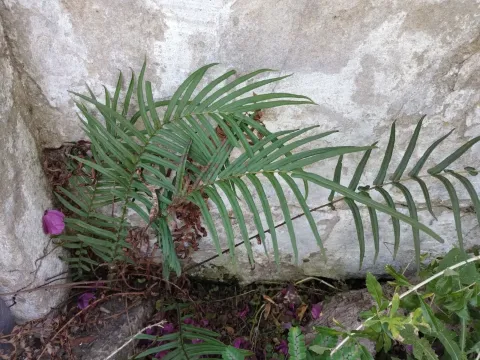
Chinese brake
Pteris vittata
The Chinese brake (Pteris vittata) is a perennial fern belonging to the Pteridaceae family. It is naturally distributed across tropical and subtropical regions, often thriving in rocky crevices and disturbed soil habitats.
What the section contains
Chinese brake
This fern requires a climate with high humidity and moderate temperatures ranging from 18 °C to 26 °C. It is shade-tolerant and performs best in environments where it is protected from intense, direct solar radiation throughout the day.
Soil requirements for optimal growth include a porous, well-draining medium rich in organic matter. Maintaining a slightly moist soil profile is critical, as the roots are sensitive to both drought stress and waterlogged conditions.
Cultivation practices involve regular misting to maintain atmospheric humidity above 60%, which mimics the plant's natural environment and prevents the browning of leaf margins, a common issue in dry conditions.
Commercially and scientifically, this species is highly valued for its phytoremediation capabilities. It serves as a potent hyperaccumulator of arsenic, making it a sustainable tool for cleaning contaminated industrial sites.
Pteris vittata is susceptible to common greenhouse pests such as scale insects, aphids, and spider mites, which can proliferate rapidly in poorly ventilated environments with suboptimal humidity levels.
Fungal pathogens including Pythium and Rhizoctonia are frequent threats, often triggered by excessive soil moisture and the use of unsterilized growing media that allows infection of the root system.
Foliar blights and leaf spots can cause significant damage to the aesthetic quality of the crop, necessitating a management strategy focused on sanitation and controlled humidity regulation.
Nutrient imbalances or salinity build-up in the substrate can weaken the fern's physiological defenses, making it more prone to secondary infections from airborne spores.
Integrated Pest Management (IPM) is recommended for this crop, emphasizing the use of biological control agents and strictly regulated environmental conditions to minimize reliance on synthetic pesticides.