
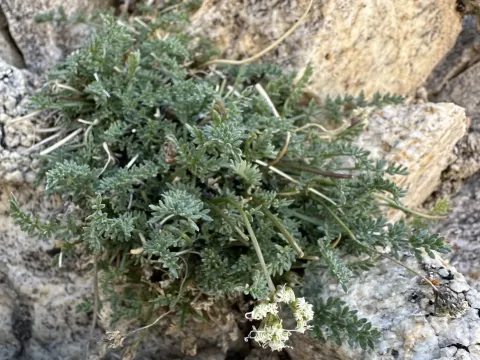
Pseudocymopterus
Pseudocymopterus
Pseudocymopterus is a perennial plant belonging to the Apiaceae family. Its seeds typically require a period of stratification to break dormancy, making late autumn the ideal sowing time.
What the section contains
Pseudocymopterus
In field conditions, seeds should be sown in rows at a depth of 1–2 cm. Proper soil contact is essential for successful germination, as the seeds are sensitive to desiccation.
Growth during the first year is notably slow, requiring the field to be kept free from competitive weeds to ensure the young plants are not shaded out or nutrient-starved.
Spacing should be maintained at 30–40 cm between individual plants to promote air circulation. Adequate space is vital to prevent the development of humidity-related fungal issues.
Once established, the crop is quite hardy and can be propagated by dividing mature rootstocks, which is a faster method than starting from seed in large-scale operations.
This crop thrives in well-drained, sandy, or rocky soils. It is highly intolerant of waterlogging, which quickly causes root decay and systemic failure of the plant.
Exposure to full sun is necessary for optimal development. Plants grown in partial shade will demonstrate reduced biomass and weaker floral stalks, affecting the overall harvest yield.
The climate requirements include moderate temperatures. The plant is well-adapted to high-altitude or temperate zones where it experiences distinct seasonal temperature shifts.
Water management must be precise. While young plants need regular moisture to establish, mature plants develop a deep root system that makes them relatively drought-tolerant.
Fertilization should be handled with caution, focusing on potassium and phosphorus rather than heavy nitrogen applications, which can cause excessive leaf growth that attracts pests.
Root rot and crown rot are the most significant threats to Pseudocymopterus, particularly in heavy or improperly drained soils. Improving soil structure is the best preventative strategy.
Powdery mildew may occur if planting density is too high or if air circulation is insufficient. Thinning the crop and ensuring dry foliage helps mitigate this risk.
Aphids and spider mites are common insect pests that target the foliage during warm and dry spells. Integrated pest management using natural predators is often effective.
Soil-dwelling larvae can occasionally damage the roots. Crop rotation involving non-Apiaceae crops is crucial for breaking the lifecycle of these subterranean pests.
Regular field scouting is recommended to identify early signs of pathogen spread, allowing for targeted intervention before the damage becomes widespread across the planting area.
Harvesting for essential oils or botanical extracts should be timed to the full flowering stage. This is when the concentration of secondary metabolites is at its peak.
Harvesting the aerial parts is best done in the early morning. This helps retain the aromatic compounds that might otherwise volatilize during the heat of the day.
For seed production, the umbels must be left until they turn brown. Careful handling is required during collection to minimize seed shatter and loss in the field.
Drying should take place in a shaded, well-ventilated area. Rapid drying at moderate temperatures preserves the color and chemical integrity of the harvested material.
Proper storage involves using airtight, moisture-proof containers in a cool, dark environment to ensure the longevity and market quality of the finished agricultural product.