
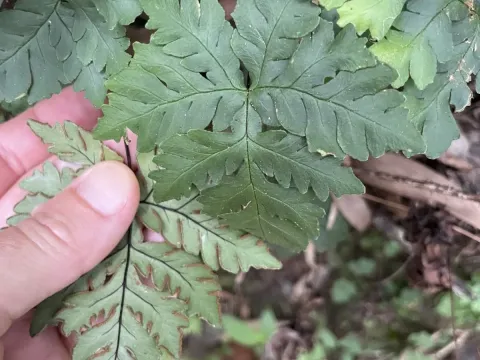
Doryopteris
Doryopteris J. Sm.
Doryopteris is a genus of ferns belonging to the Pteridaceae family, known for its distinct foliage which often features arrow-shaped or pedate fronds. These plants are primarily cultivated as decorative specimens in professional horticulture due to their unique morphological traits.
What the section contains

Doryopteris
Originating from tropical and subtropical regions, these ferns thrive in environments that mimic the floor of a humid forest. Successful cultivation requires a greenhouse setting where temperature and humidity are kept within precise limits to support the plant's delicate growth cycle.
The climate requirements include a steady ambient temperature ranging between 18°C and 25°C. Exposure to sudden temperature fluctuations or cold drafts can cause severe physiological stress, manifesting as browning of the frond tips or overall plant wilting.
Regarding soil, Doryopteris requires a medium that is highly permeable, nutrient-rich, and slightly acidic. A common industry mixture includes peat moss, perlite, and pine bark to ensure the roots remain well-oxygenated while retaining necessary moisture levels.
Watering protocols must prioritize consistency. While the substrate should remain moist to the touch, excessive saturation often leads to hypoxia in the root zone, significantly increasing the risk of rot and other secondary plant health issues.
Common pests affecting Doryopteris include spider mites, scale insects, and mealybugs. These organisms typically inhabit the undersides of the leaves, drawing nutrients from the plant and causing significant structural and aesthetic degradation to the foliage.
Diseases such as root rot and leaf spot are predominantly linked to poor management practices, specifically regarding drainage and air circulation. In stagnant environments, pathogenic fungi proliferate, leading to the rapid decay of the plant's rhizomes and fronds.
Integrated pest management (IPM) is recommended for this crop, emphasizing prevention through strict quarantine of new stock and daily monitoring. Maintaining the correct humidity level is the most effective biological barrier against spider mites, which thrive in dry conditions.
If chemical interventions are necessary, select products labeled for use on greenhouse ornamentals, ensuring the foliage is covered completely. Always perform a small test application on a single plant to verify sensitivity before treating the entire crop batch.
To ensure long-term health, growers must sanitize growing containers and tools regularly. Proper spacing between individual plants is also crucial to reduce the incidence of moisture-related fungal infections by facilitating better airflow throughout the canopy.