
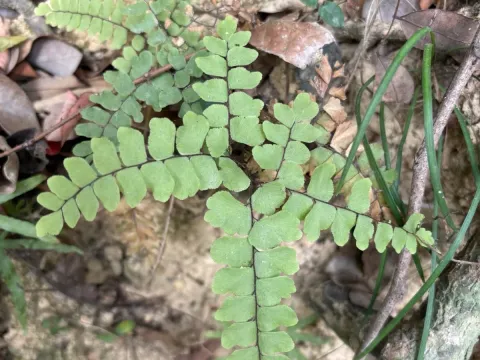
Fan-leaved maidenhair fern
Adiantum flabellulatum
The Fan-leaved maidenhair fern (Adiantum flabellulatum) is a member of the Pteridaceae family, native to the tropical and subtropical regions of Southeast Asia. This species is highly prized by collectors for its distinctive fan-shaped fronds and delicate, aesthetic appearance that makes it a standout in any collection.
What the section contains
Fan-leaved maidenhair fern
Botanically, the plant is characterized by rigid, dark-colored stipes and coriaceous leaflets that are tougher than those of other species in the genus. The root system is rhizomatous, preferring a loose, humus-rich, and well-draining substrate that mimics the moist forest floor of its natural habitat.
To successfully cultivate this fern, it is essential to maintain a stable environment with bright, indirect light. Direct exposure to intense sunlight will quickly dehydrate the plant and scorch the delicate foliage, leading to irreversible damage that ruins its ornamental value.
Environmental requirements include a consistently high level of ambient humidity and moderate temperatures ranging between 18 and 24 degrees Celsius. It is vital to protect the plant from cold drafts and sudden changes in climate, as these stressors can trigger leaf drop and decline in vigor.
In terms of economic usage, Adiantum flabellulatum is primarily cultivated as a high-value ornamental plant. It is widely used in the interior design industry, public landscape installations, and home gardening, where it serves as a sophisticated element for vertical gardens and humid greenhouse environments.
Scale insects and mealybugs are the most common pests that affect the Fan-leaved maidenhair fern. These pests hide in the crevices of the stipes and underneath the leaflets, gradually weakening the plant by extracting sap and causing localized yellowing or browning of the foliage.
Spider mites represent a significant threat to this species, especially during the winter months when indoor humidity levels drop significantly. Infestations are easily identified by the presence of fine webbing and a stippled appearance on the leaves, which requires immediate quarantine and treatment.
Root rot is the most frequent disease, occurring almost exclusively due to poor drainage and overwatering practices. Since the fern's roots are sensitive to waterlogging, it is critical to use a porous, well-draining potting medium and ensure that the container has sufficient drainage holes.
Fungal leaf spot diseases may develop if the foliage remains constantly damp while the ambient air remains stagnant. Ensuring proper air circulation around the plant is an effective strategy to prevent the proliferation of fungal spores and to maintain the overall health of the fern's fronds.
Effective pest and disease control requires a preventative strategy involving regular monitoring of the plant's condition and maintaining optimal horticultural practices. Using neem oil or mild insecticidal soaps is usually effective for small infestations, while maintaining stable humidity remains the best natural defense.