
Cheilanthes
Cheilanthes
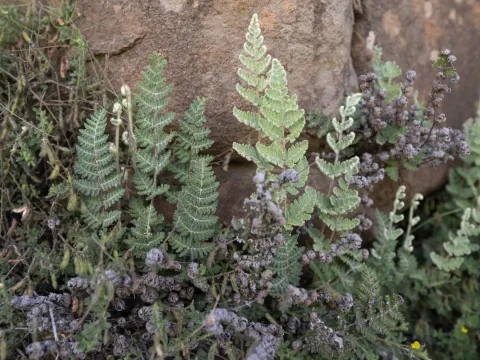
Cheilanthes is a genus of ferns within the Pteridaceae family, comprising approximately 180 species. Known commonly as lip ferns, these plants have evolved to thrive in arid and rocky environments, demonstrating remarkable resilience.
What the section contains


Cheilanthes
For successful cultivation, the substrate must mimic the natural rocky habitat of the fern. A coarse, well-draining mix containing grit, sand, and organic matter is essential to prevent root rot and ensure proper aeration.
Light intensity should be carefully managed. While Cheilanthes ferns prefer bright, indirect light, they can be sensitive to direct sun exposure, which causes leaf scorch and dehydration of the delicate fronds.
Temperature management is critical for optimal growth. These ferns generally perform best in moderate climates, requiring consistent temperatures and protection from cold drafts or excessive heat spikes in a controlled environment.
Watering requirements are specific: the growing medium should be kept moist but never waterlogged. Monitoring soil moisture levels is vital, as these ferns are particularly susceptible to root crown decay if the drainage is poor.
Root rot is the most significant threat to the health of Cheilanthes. It is almost exclusively caused by excessive moisture levels in the root zone and improper potting media drainage.
Pests such as scale insects can infest the fronds, feeding on plant sap. These pests are often difficult to detect in early stages, making regular manual inspection a necessary agricultural practice.
Mealybugs are another common threat, appearing as white, cottony masses. Their presence can severely weaken the plant and lead to secondary fungal infections if not addressed promptly with soap or systemic insecticides.
Spider mites represent a risk, particularly in indoor environments with low humidity. They cause stippling on the leaves and can lead to rapid defoliation if left unchecked.
Viral infections, although less common, may occur if hygiene protocols in a greenhouse are neglected. Maintaining clean tools and preventing overcrowding is the primary defense against such pathogens.