
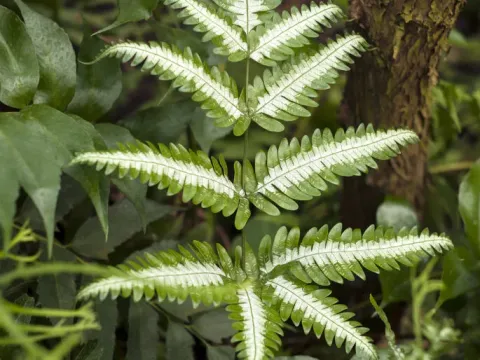
Dark-green brake
Pteris atrovirens
The dark-green brake, scientifically known as Pteris atrovirens, belongs to the Pteridaceae family. It is a perennial fern native to tropical African habitats, where it thrives in shaded and humid environments.
What the section contains
Dark-green brake
Botanically, this species is characterized by its creeping rhizomes and leathery, dark green fronds. Its aesthetic appeal makes it a valuable plant for indoor gardening and specialized botanical displays in temperate climates.
To cultivate Pteris atrovirens successfully, one must maintain an ambient temperature between 18°C and 25°C. The plant is sensitive to cold drafts and rapid temperature fluctuations, which can damage the delicate fronds.
Soil requirements include a well-draining, moisture-retentive medium with a neutral or slightly acidic pH. A mix containing peat, leaf mold, and perlite provides the necessary structure to support healthy root development.
Humidity is the most critical environmental factor. High moisture levels in the air are required for the plant to remain vibrant; therefore, regular misting or the use of humidifiers is strongly recommended in domestic settings.
Root rot remains the primary threat to the dark-green brake, typically caused by overwatering or poor drainage systems. Excess standing water in the pot deprives the roots of oxygen, leading to rapid decay.
Common pests include scale insects and mealybugs, which tend to infest the undersides of the fronds. These pests feed on the plant's sap, weakening the overall vigor and leading to stunted growth.
Spider mites are another frequent problem, especially when ambient humidity drops below optimal levels. These microscopic pests create fine webs and cause the fronds to lose their characteristic dark green luster.
Fungal leaf spot diseases may appear if there is poor air circulation. Removing affected foliage and improving ventilation within the growing area are effective strategies for managing these infections.
Strict adherence to a regular maintenance schedule, including soil checks and foliage inspection, helps ensure the longevity of the plant. Preventive treatments with mild organic fungicides can also be beneficial in greenhouse environments.