
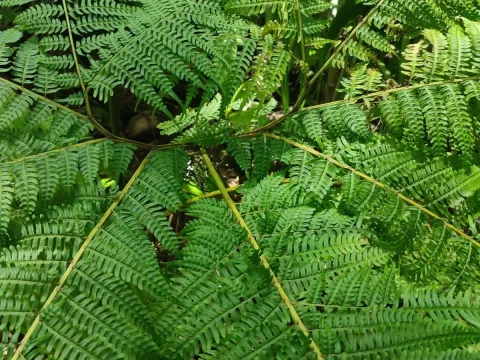
Giant brake
Pteris tripartita
The Giant brake (Pteris tripartita) belongs to the Pteridaceae family. This fern species is native to tropical regions of Africa, Asia, and Oceania, where it thrives in the understory of dense forests.
What the section contains
Giant brake
For successful cultivation, the plant requires high humidity levels and a stable environment. It is an excellent choice for shaded areas where other houseplants might struggle, provided the temperature remains moderate year-round.
The soil requirement for this fern is a well-draining, peat-based potting mix that retains moisture while allowing excess water to escape. Overwatering is a common mistake that can lead to root system failure.
Light levels should be kept indirect; bright, direct sunlight will scorch the delicate fronds and cause permanent damage. Partial shade or filtered light mimics its natural forest floor habitat most effectively.
During the active growing season, consistent moisture in the root zone is crucial. Fertilization should be kept to a minimum, using a diluted balanced fertilizer only once every few months to support frond production.
The primary pests affecting Pteris tripartita include scale insects and spider mites. These pests thrive in dry conditions, which is why maintaining adequate humidity is a key cultural control method.
Fungal pathogens such as Pythium and Phytophthora can cause root rot if the growing medium is kept constantly waterlogged. Proper air circulation and drainage are essential to mitigate these risks in an indoor or greenhouse setting.