
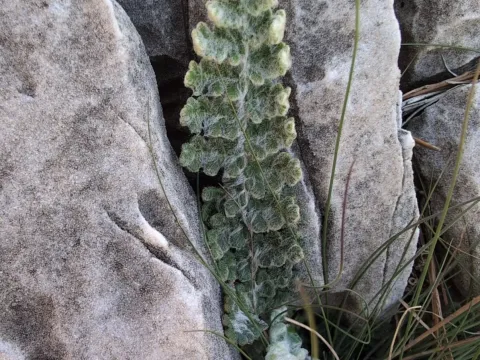
Cosentinia
Cosentinia
Cosentinia is a genus of perennial ferns belonging to the family Pteridaceae. These plants are uniquely adapted to harsh environments, often thriving in rocky crevices and arid conditions where few other species can survive.
What the section contains

Cosentinia
The native range of the genus is primarily centered in the Mediterranean basin, extending to the Canary Islands and parts of Africa. They are typically found on limestone outcrops, where their rhizomes anchor them firmly into narrow fissures.
Botanically, Cosentinia is characterized by pinnate fronds that are covered in scales or dense hairs. These features serve as an evolutionary mechanism to retain moisture and reflect intense solar radiation, protecting the plant from desiccation.
Cultivation requirements for this fern are quite specific: it demands a well-draining, stony substrate that mimics its natural habitat. Overwatering is the most significant danger, as these ferns are susceptible to root rot if moisture remains stagnant.
The primary use of Cosentinia is ornamental, particularly in specialized rock gardens and xeriscaping projects. Its ability to tolerate dry periods makes it a valuable species for gardeners looking for drought-tolerant, low-maintenance ferns.
The main threats to Cosentinia in a cultivated setting are primarily related to poor drainage and fungal pathogens. Root rot remains the most lethal issue, usually caused by improper soil composition or excessive irrigation.
Pests such as spider mites and scale insects may occasionally infest the plants, particularly when they are kept in environments with low air circulation or inadequate humidity control. These pests can weaken the fronds by feeding on plant fluids.
Effective management includes maintaining a strict watering schedule where the soil is allowed to dry out significantly between cycles. Regular inspection of the undersides of the fronds is essential for early detection of pests.
Chemical control should be approached with caution, using only systemic or contact insecticides that are safe for ferns to avoid burning the foliage. Often, cultural control measures, such as pruning dead fronds, are sufficient to manage health.
Providing optimal environmental conditions—namely light, rocky soil, and proper air flow—remains the most effective way to prevent diseases and ensure the long-term survival of these robust rock ferns.