
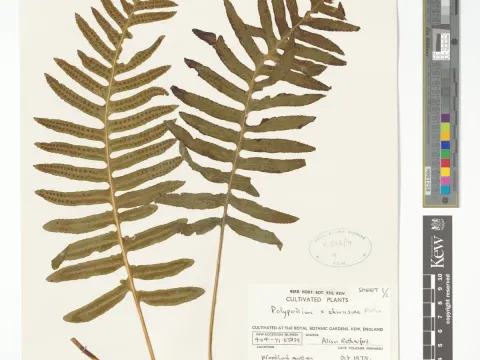
Polypodium shivasiae
Polypodium shivasiae
Polypodium shivasiae is a rare species of epiphytic fern belonging to the Polypodiaceae family. In its natural habitat, this plant grows in tropical and subtropical forests, preferring humid and shaded areas. It is characterized by high requirements for a stable microclimate that mimics the natural forest canopy conditions.
What the section contains
Polypodium shivasiae
The plant requires loose, well-aerated substrates containing high amounts of organic components, such as shredded bark, sphagnum moss, and leaf compost. Soil acidity should be maintained at a slightly acidic level to facilitate better nutrient absorption by the fern's root system.
Successful growth requires high air humidity, which should not drop below 60-70%. The optimal temperature range for this species is between +18°C and +24°C, as sharp temperature fluctuations and cold drafts can cause significant damage to the delicate fronds.
The culture thrives in diffused lighting; exposure to direct sunlight inevitably leads to burns on the surface of the leaf blades. In home or greenhouse settings, it is recommended to place the plant near east or west-facing windows, or to use phyto-lamps with a soft light spectrum.
Irrigation should be regular but moderate, using soft, settled water at room temperature. It is critical to avoid water stagnation in the saucer, as this promotes the development of root rot, to which the species is highly susceptible if agrotechnical guidelines are not followed.
The most dangerous pests for this species are scale insects and spider mites, which typically attack the plant when air humidity indoors is low. Regular inspection of the underside of the fronds allows for the early detection of parasite colonies.
Poor ventilation and improper watering regimes increase the risk of fungal infections. Main symptoms include the appearance of dark spots on the fronds and the softening of rhizomes, which signals an urgent need for substrate replacement and treatment with fungicides.