
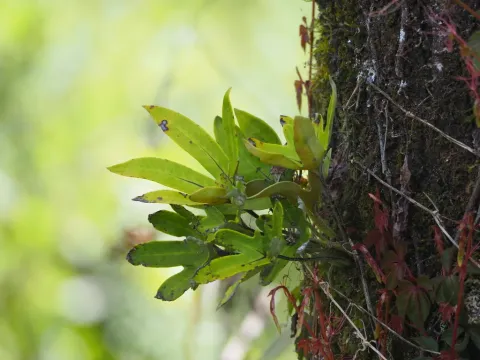
Pyrrosia
Pyrrosia Mirb.
Pyrrosia is a genus of ferns belonging to the family Polypodiaceae. These plants are widely recognized for their leathery, often felted leaves, which adapt them to survive in epiphytic conditions, growing on tree trunks or rocks across Asia, Africa, and the Pacific islands.
What the section contains


Pyrrosia
Unlike traditional ground-dwelling ferns, Pyrrosia species have evolved to store water efficiently, often utilizing the dense trichomes on their leaves to minimize transpiration and survive in regions with variable rainfall patterns.
Cultivation requirements involve providing bright, filtered light. While they can tolerate lower light levels, growth will be slower, and the plant will be less likely to produce its characteristic thick foliage. Avoid intense direct sun which can damage the leaf structure.
The substrate must be exceptionally well-draining, mimicking an epiphytic environment. A mix consisting of orchid bark, perlite, and a small amount of peat moss is ideal to ensure that roots receive sufficient oxygen and do not remain saturated for long periods.
Temperature management is straightforward, as these plants generally prefer a temperate climate. They thrive between 18–24 degrees Celsius. During the winter, providing a slightly cooler period helps the plant prepare for the next growth cycle, provided humidity remains stable.
Pests such as scale insects and mealybugs are the primary threats to Pyrrosia. They often congregate in the fuzzy underside of the fronds, where they extract sap and leave behind honeydew that can trigger secondary fungal issues.
Root rot is the most common physiological ailment. It is invariably caused by overwatering or using a potting mix that lacks sufficient drainage, leading to the rapid decay of the rhizomes which are sensitive to hypoxic conditions.
To control pest infestations, manual removal with a soft brush or cotton swab dipped in alcohol is recommended. For severe cases, horticultural oils may be used, though care should be taken to test a small area first due to the foliage's sensitive texture.
Maintaining optimal airflow around the foliage is a key defense against fungal growth and pathogens. Stagnant, humid air is a primary contributor to leaf spot diseases which manifest as unsightly brown or black patches on the fronds.
Finally, always sanitize all gardening tools when dividing or repotting the plant. Good hygiene is essential to prevent the spread of spores or pathogens between different parts of the plant or to other specimens in your collection.