
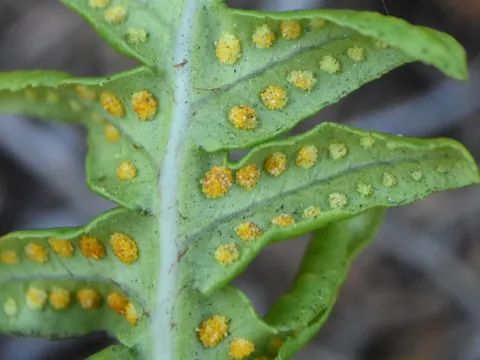
Polypodium calirhiza
Polypodium calirhiza
Polypodium calirhiza is a species of fern in the Polypodiaceae family. This plant is a natural hybrid known for its resilient nature, primarily found in the western regions of North America, where it thrives in rocky crevices and on tree trunks.
What the section contains
Polypodium calirhiza
The plant features a creeping rhizome that allows it to spread slowly over time. Its fronds are deeply pinnate, providing a lush, delicate appearance that makes it a popular choice for rock gardens and shaded forest-style landscapes.
Optimal growth conditions involve shaded or semi-shaded environments. While the plant can tolerate some light, it is essential to protect it from harsh, direct sunlight which can scorch its leaves and stunt its overall development.
The soil should be loose, organic-rich, and well-draining. A mix of peat, leaf mold, and pine bark creates the ideal substrate for this fern, ensuring proper aeration for the rhizomes while maintaining the necessary moisture balance.
Consistent moisture is key to the health of Polypodium calirhiza. However, overwatering must be avoided at all costs, as stagnant water is the primary cause of rhizome decay and the eventual loss of the plant structure.
Fungal pathogens are the most common threats to the health of this fern. These issues are typically triggered by poor air circulation and water-logged soil, which compromise the plant's natural defenses.
Slugs and snails are frequent pests that target young fronds. They can cause significant aesthetic damage in a short time, making it necessary to implement protective measures such as physical barriers or organic baits.
Spider mites may become a problem in environments with low humidity. Monitoring the underside of the leaves is recommended, especially during warmer months, to detect any signs of infestation early.
Root rot is a critical threat that stems from improper planting depth. The rhizomes should be kept close to the surface, as burying them too deeply prevents respiration and leads to a swift decline in plant vigor.
Good cultural practices, such as removing dead fronds and providing adequate space for airflow, are the best defense against both pests and diseases. Careful management ensures long-term vitality for these specialized ferns.