
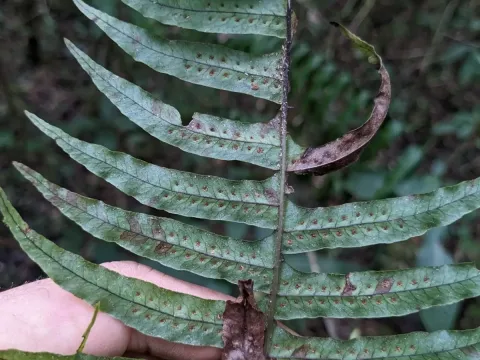
Polypodium loriceum
Polypodium loriceum
Polypodium loriceum is an epiphytic fern belonging to the Polypodiaceae family. It is native to the tropical regions of Central and South America, where it thrives in humid forests, typically growing on trees or rocky substrates as a creeper.
What the section contains
Polypodium loriceum
The plant requires a high level of humidity, ideally between 70% and 80%. In cultivation, maintaining this moisture level is critical to prevent the fronds from browning or curling at the tips, which is a common sign of stress.
The ideal temperature for growing Polypodium loriceum ranges from 18°C to 24°C. It is important to protect the fern from cold drafts and sudden temperature fluctuations, as the plant is sensitive to thermal shock which can stunt its growth.
The substrate must be highly permeable, mimicking the epiphytic environment. A mix of orchid bark, peat moss, perlite, and charcoal works best, ensuring that the roots and rhizomes have sufficient access to oxygen and moisture.
Lighting should be bright but indirect. Direct sunlight can severely damage the fronds, leading to bleached patches or scorched tissue. Placing the plant in a shaded or semi-shaded area is optimal for maintaining deep green foliage.
Root rot is the most common health issue for this species, usually caused by overwatering or poor drainage. Ensuring that the substrate remains moist but never waterlogged is essential for the longevity of the rhizomes.
Spider mites are a frequent pest, particularly in environments where air humidity is low. These pests colonize the underside of the fronds, causing yellowing and webbing, which can quickly weaken the plant if left untreated.
Scale insects and mealybugs can also infest the plant, often finding refuge under the characteristic scales on the creeping rhizome. Regular monitoring of the rhizome is necessary to detect these pests before they spread to the leaves.
Good air circulation is vital to prevent fungal infections. Stagnant air coupled with high humidity provides a perfect breeding ground for various molds, which can damage the delicate plant tissue.
Control strategies should focus on preventive care, including cleaning the foliage and maintaining consistent microclimate conditions. In case of infestation, organic soaps or neem oil solutions are often effective and safe for this sensitive fern.