
Rumohra
Rumohra
Rumohra, commonly known as leatherleaf fern, belongs to the Dryopteridaceae family. In its natural habitat, the plant grows in the tropical and subtropical forests of the Southern Hemisphere, including South Africa and Madagascar. It prefers filtered light and high humidity.
What the section contains

Rumohra
The optimal temperature for active growth ranges between 18 and 24 degrees Celsius. It is crucial to avoid sharp temperature fluctuations and drafts, which negatively affect the condition of the delicate fronds. The root system requires a loose, breathable substrate with a neutral to slightly acidic pH.
Watering should be regular but moderate to avoid water stagnation in the root zone, which triggers rot. During the active growth phase, the crop requires balanced mineral fertilizers with low nitrogen concentrations. Humidity should be maintained via misting or the use of humidifiers.
Botanically, Rumohra is distinguished by its leathery, glossy, dark green leaves, which hold high ornamental value. The plant can withstand short drought periods, but prolonged stress causes loss of turgor. In commercial greenhouses, artificial shading is used to protect the crops.
The primary commercial use of Rumohra is the production of cut foliage for the floral industry. Due to its high leaf density and long vase life, the plant serves as a premium filler for bouquets and interior floral arrangements.
The main threat to the crop includes fungal infections caused by improper watering regimes and poor air circulation. Root rot is the most common issue, leading quickly to the death of the entire plant.
Among pests, scale insects and spider mites cause the most damage. They feed on the sap of young fronds, causing deformation and necrosis. Control measures involve systemic insecticides and acaricides, as well as maintaining proper humidity levels.
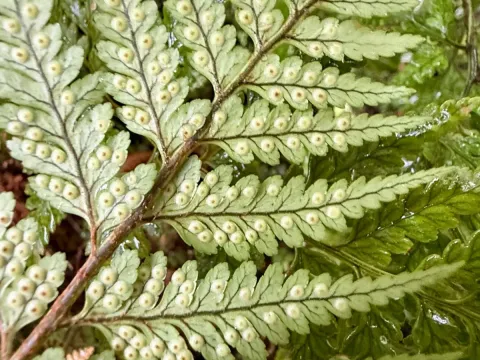
Mealybugs can also infest Rumohra, hiding at the base of the leaves and among spores. Regular inspection of the underside of the leaves allows for early detection of pest colonies. Timely sanitary pruning of damaged foliage is essential.
Disease prevention includes sterilizing the soil substrate before planting and ensuring optimal air circulation. Using high-quality planting material significantly reduces the risk of introducing infections into the greenhouse environment.
Biological control methods, such as the use of entomophages, are becoming increasingly popular in professional Rumohra farming. This allows for a reduction in the use of aggressive chemicals while maintaining the aesthetic quality of the marketable product.
Harvesting of Rumohra fronds is done by hand once they reach commercial maturity. The leaves must be fully formed, with a rich color and firm texture. It is important to select fronds with well-developed sporangia, unless otherwise specified by market requirements.
Cutting is performed using sharp tools at the very base of the rhizome, taking care not to damage the growth buds. Harvesting is best conducted in the early morning when the plant is fully hydrated, ensuring a longer life in the vase.
After harvesting, the greenery is sorted by length and leaf quality. Specimens with mechanical damage or signs of pest infestation are discarded. This is a critical step to maintain the quality of the commercial batch.
The cut product is packed in specialized films or cardboard boxes to prevent moisture evaporation during transport. The storage temperature should be maintained at 5–8 degrees Celsius.
When stored correctly in cool conditions, cut Rumohra maintains a fresh appearance for up to three weeks. This makes the crop one of the most sought-after items in the "filler foliage" segment of the global market.