
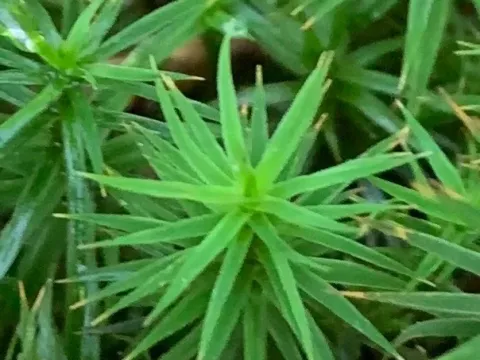
Polytrichastrum formosum
Polytrichastrum formosum
Polytrichastrum formosum, commonly known as the bank haircap moss, is a member of the Polytrichaceae family. It is a perennial moss species that forms dense, dark green colonies on the forest floor, playing a vital role in local ecosystems.
What the section contains
Polytrichastrum formosum
This species is widely distributed across the Northern Hemisphere. It thrives in moist, shaded environments, including damp forest soils, decaying logs, and rocky substrates where humidity levels remain relatively high throughout the season.
The plant requires stable environmental conditions to survive. It is highly dependent on atmospheric moisture and sensitive to dehydration. In terms of soil requirements, it prefers acidic to neutral substrates rich in organic matter.
Botanically, it features a complex internal structure with specialized conducting tissues that help transport water efficiently. The leaves possess longitudinal lamellae on their upper surface, which are adaptations for photosynthesis under low-light conditions.
Reproduction is carried out through spores produced in capsules raised on long setae. These structures are adapted to ensure efficient spore dispersal by wind or rain, facilitating the colonization of new suitable habitats within the forest.
As a forest-dwelling bryophyte, Polytrichastrum formosum does not face the typical pests or diseases associated with traditional agricultural crops; however, it is susceptible to various environmental pressures.
Habitat destruction remains the most significant threat. Deforestation and land drainage severely alter the microclimate, leading to the rapid desiccation of moss colonies and their eventual disappearance from the area.
Pollution, particularly the deposition of nitrogenous compounds and heavy metals, can significantly hinder the growth of this species. Mosses are known as bioindicators, as they readily absorb and react to environmental toxins.
Changes in forest canopy density can also pose a threat. Increased sunlight exposure causes direct physiological stress, leading to water loss and the decline of the green photosynthetic tissue.
While natural fungal pathogens may occur, they are generally rare. The main risk factor is the disruption of the delicate ecological balance required for the moss to maintain its moisture levels and reproductive cycle.