
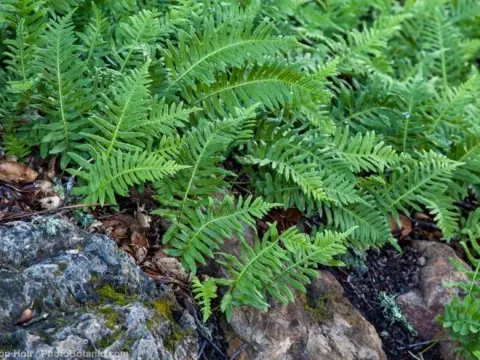
Polypodium
Polypodium hybrids
Polypodium is a genus of ferns belonging to the Polypodiaceae family. These plants are characterized by their creeping rhizomes and are widely distributed across the temperate regions of the Northern Hemisphere. They are often found growing as lithophytes or epiphytes in natural environments.
What the section contains
Polypodium
In cultivation, Polypodium species require a stable environment with filtered light. They are perfect for shaded gardens or indoor spaces where direct sun exposure is minimized, as the delicate fronds can easily scorch under intense light conditions.
The substrate should be lightweight, well-draining, and rich in organic matter. A mixture containing peat moss, pine bark, and leaf mold works best to mimic the natural forest floor conditions where these ferns naturally thrive.
Moisture management is critical for the health of the rhizome. The soil should remain consistently moist but never waterlogged. Good drainage is essential, as the roots are prone to rot if kept in standing water for extended periods.
Temperature control is generally straightforward, with most hybrids preferring cool to moderate temperatures between 15°C and 20°C. They do not tolerate extreme heat or frost well, so placing them in a sheltered area is recommended for long-term health.
Common pests that infest Polypodium include aphids and mealybugs. These insects can be manually removed or treated with insecticidal soaps if the infestation is detected early and the plant is isolated from other specimens.
Fungal issues, such as root rot and leaf blight, often stem from poor ventilation and overwatering. To prevent these diseases, ensure that the plant has adequate air circulation and that the top layer of the substrate is allowed to dry out slightly between waterings.