
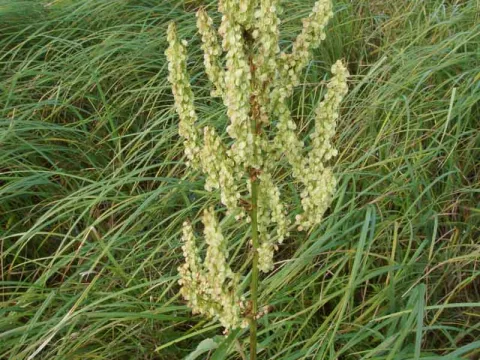
Round-leaved dock
Rumex orbiculatus
Round-leaved dock (Rumex orbiculatus) is a robust perennial herb belonging to the Polygonaceae family. It is naturally found in wetlands, meadows, and along riverbanks, which indicates its high affinity for moisture.
What the section contains
Round-leaved dock
The plant thrives in fertile, loamy soils that maintain consistent humidity throughout the growing season. While it prefers acidic to neutral pH levels, it shows remarkable adaptability to various soil types, including poorly drained areas.
Botanically, this species is characterized by its large, orbicular basal leaves and a deep, extensive root system. These features allow the plant to establish itself firmly and remain productive for several consecutive years.
It is highly winter-hardy, capable of surviving harsh freezing temperatures without specific protection. The species prefers cool to moderate climates, which helps maintain the tenderness of its leaves for longer periods.
In a controlled environment, providing consistent moisture is essential to maximize leaf size and prevent the plant from transitioning prematurely into the reproductive, flowering stage.
Sowing should take place early in the spring as soon as the soil can be worked. Seeds require cool temperatures to germinate effectively, usually between 8 and 15 degrees Celsius.
Alternatively, fall sowing is a viable strategy, allowing the seeds to undergo cold stratification in the soil. This ensures rapid and uniform germination as soon as spring temperatures arrive.
Sow seeds at a shallow depth of approximately 1 centimeter. Proper spacing between rows is critical, with 40–50 centimeters being the standard to allow for root expansion and foliage growth.
Maintaining high soil moisture after sowing is vital for success. The use of mulch can help retain moisture in the surface layers of the soil, preventing the small seeds from drying out during the delicate establishment phase.
Thinning the seedlings once they have formed their first true leaves ensures that each plant has enough space to develop its full leaf rosette, significantly increasing overall crop yield.
The yield of Round-leaved dock is measured by the total weight of harvested leaves over the course of the season. A well-managed plantation can provide multiple harvests from the second year of growth onward.
In optimal conditions, growers can expect 3 to 4 cuttings per year. Each cutting should be done when the leaves reach a length of 15 to 20 centimeters, ensuring peak quality and flavor profiles.
Nitrogen fertilization after each harvest cycle is highly recommended to promote vigorous regrowth. Proper management of the nutrient supply ensures that the plant remains in a vegetative state rather than producing flower stalks.
The productive lifespan of an individual plant typically spans 4 to 6 years. As the plants age, their leaf production may diminish, and the clumps may become overly dense, necessitating division or replanting.
Crop rotation should be practiced after the plantation cycle ends to prevent the accumulation of species-specific soil pathogens and to restore the nutrient balance of the field.
Rust diseases (Puccinia spp.) represent the primary pathogenic threat, especially in humid conditions. Managing air circulation through proper plant spacing is the most effective cultural control method.
Various beetles, particularly the dock leaf beetle, can defoliate the plants if left unchecked. Early detection via regular field scouting allows for targeted interventions using biological control agents.
Aphids can cause leaf curling and transmit viruses. Maintaining a diverse ecosystem around the plot can encourage beneficial insects, such as ladybugs, which help keep aphid populations below the economic injury level.
Root rot is common in sites that experience prolonged waterlogging during the dormant season. Improving drainage and ensuring the soil is not overly compacted can mitigate this risk significantly.
Weed competition can severely suppress the growth of young dock plants. Consistent manual or mechanical weeding is essential until the plant's canopy is large enough to shade out competing weeds.
Harvesting should be carried out during the cool hours of the day, preferably in the morning. This maintains the crispness of the leaves and prevents wilting immediately after harvest.
Use a sharp, clean knife to cut the leaves about 3 centimeters above the crown. Care must be taken not to slice into the crown itself, as this would damage the regeneration points and kill the plant.
Post-harvest management involves keeping the leaves cool and away from direct sunlight. Stacking the leaves too high can lead to heating and decay, so airy containers are preferred for transport.
Sorting is necessary to remove any damaged or yellowing leaves. A uniform, clean product is essential for meeting quality standards and ensuring high marketability for fresh produce.
For temporary storage, maintaining temperatures near 0 degrees Celsius with high humidity is ideal. This slows down respiration rates and keeps the foliage succulent for distribution.