
Buckthorn bully
Sideroxylon lycioides
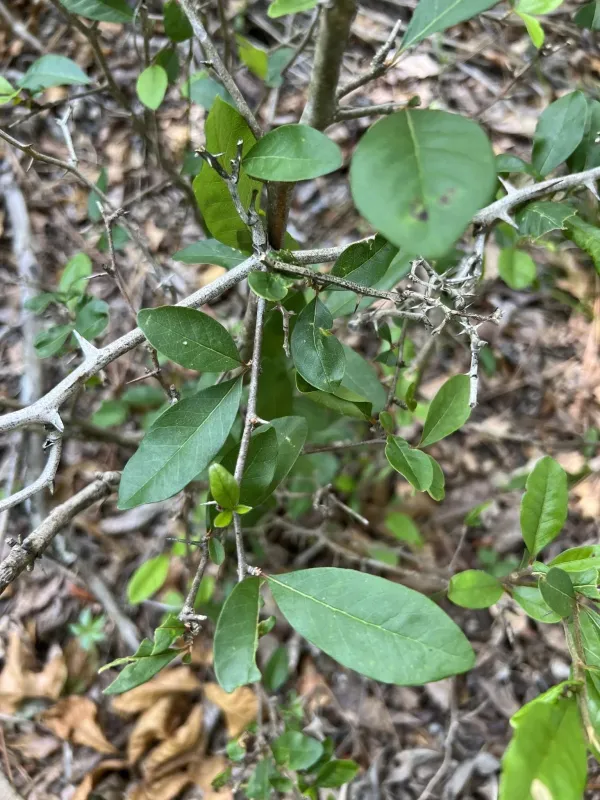
Description
Growing requirements
Buckthorn bully (Sideroxylon lycioides) is a deciduous tree or shrub belonging to the Sapotaceae family. It is native to the southeastern and south-central United States, typically found in wooded areas and alluvial forests.
This species requires well-drained, fertile soil to achieve optimal growth. While it exhibits tolerance to varied soil compositions, it thrives best in moist, slightly acidic to neutral loamy environments, reflecting its natural riparian habitats.
Regarding climate, it prefers regions with long, warm growing seasons and adequate rainfall. Although it can withstand some cold, it is sensitive to extreme frosts and requires protection during its establishment phase in cooler climates.
Botanically, Sideroxylon lycioides is characterized by its stiff, spiny branches and simple, glossy leaves. The small, greenish-white flowers develop into drupe-like fruits, providing a food source for local wildlife and birds.
Economic uses for this tree include its application in landscape architecture as a screening plant due to its dense, thorny nature. Additionally, its wood, known for being heavy and hard, has historically been utilized in specialized woodworking.
Main diseases and pests
Fungal pathogens associated with root rot are the primary threat when the tree is planted in heavy, waterlogged soils. Ensuring proper drainage is the most effective cultural practice to mitigate this risk.
Scale insects and aphids are the most common pests observed on this plant. They tend to colonize the underside of leaves and tender stems, potentially weakening the plant if infestations are not managed.
Winter damage from rodents can be a significant issue for young saplings. Protective tree guards should be installed around the base to prevent bark stripping and girdling during the dormant season.
The spread of fungal leaf spots can be prevented by maintaining air circulation through regular pruning. Cleaning up fallen foliage during autumn is also essential to reduce the inoculum level for the following spring.
Integrated pest management (IPM) practices should be followed, prioritizing early detection and manual removal of affected parts before resorting to chemical interventions for pest control.