
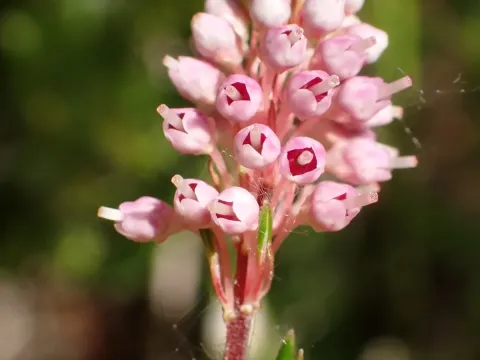
Bruckenthalia spiculifolia
Bruckenthalia spiculifolia
Bruckenthalia spiculifolia is a charming evergreen shrub belonging to the Ericaceae family. Often referred to as Spike Heath, it forms dense, low-growing mats, typically reaching 10–25 cm in height, making it an excellent groundcover.
What the section contains
Bruckenthalia spiculifolia
Native to the mountains of Southeastern Europe and Turkey, this plant is well-adapted to cooler climates with good air circulation. It thrives in alpine-like conditions, preferring locations with full sun to partial shade exposure throughout the growing season.
The success of this culture heavily depends on soil chemistry. It requires well-drained, acidic soil rich in organic matter. Gardeners must ensure the pH level remains between 4.5 and 5.5, which is essential for nutrient uptake and overall plant vitality.
Regarding moisture, the plant is intolerant to waterlogged soils. A robust drainage system is mandatory when planting. During extended dry spells, supplemental watering is necessary, but the soil should be allowed to dry slightly between applications.
Winter maintenance involves protection from extreme desiccation in windy areas. Applying a layer of pine needle mulch is highly recommended to preserve soil acidity, retain moisture, and provide additional root insulation against frost cycles.
The most significant threats to Bruckenthalia spiculifolia are root pathogens, specifically Phytophthora, caused by stagnant water in the root zone. Ensuring excellent soil porosity is the primary preventive measure against these devastating infections.
Pest issues include typical ornamental plant invaders like aphids and spider mites. These are usually manageable with proper cultural practices, such as adequate spacing and regular monitoring, supplemented by biological or chemical control when necessary.