
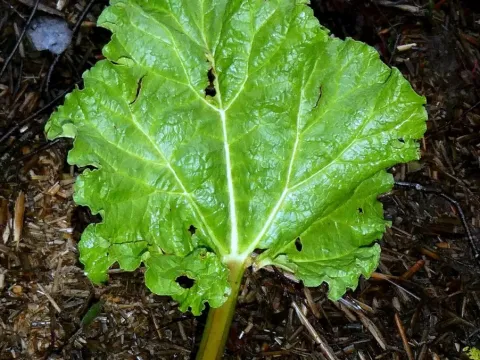
Rhubarb
Rheum L.
Rhubarb is a perennial herbaceous plant belonging to the Polygonaceae family, most commonly propagated vegetatively by dividing the rhizomes. The optimal time for planting is early spring or early autumn when the plant is dormant.
What the section contains


Rhubarb
When propagating by seeds, sowing is performed in early spring in nurseries or directly into well-prepared soil to a depth of 2–3 centimeters. Seeds germinate at temperatures between +15 and +20 degrees Celsius.
When dividing the crown, it is important to select healthy 3-to-4-year-old specimens that have a robust root system and well-developed buds. Each division must contain at least one large bud and a section of the fleshy root.
It is essential to follow a planting layout that provides sufficient space for each plant, as rhubarb spreads significantly. The recommended distance between plants is 70 to 100 centimeters depending on the cultivar.
Rhubarb can thrive and produce yields on the same site for 10 to 15 years, so choosing the right location and soil preparation are critical for long-term productivity.
This crop prefers fertile, deeply cultivated loamy soils with a neutral or slightly acidic pH. Rhubarb is highly sensitive to waterlogging, so the site must have excellent drainage to avoid stagnant water.
The plant is cold-hardy and capable of surviving harsh winters because its rhizomes are deep in the soil. However, for early production in commercial operations, temporary plastic covers are often used.
Rhubarb is sun-loving but can tolerate light shade, making it suitable for growing in orchard interrows. High light exposure promotes the accumulation of sugars and organic acids in the petioles.
Water requirements are high: if water is insufficient, the petioles become fibrous, tough, and lose their culinary quality. Regular irrigation is necessary during dry spells, especially during the active growth phase.
Intensive development requires high amounts of organic fertilizers. Incorporating compost or well-rotted manure during planting and annual mulching help maintain high soil fertility levels.
Commercial yields of rhubarb depend on the age of the plantation and the agronomic standards applied. Harvesting should not be conducted in the first two years to allow the root system to establish fully.
Starting from the third year, harvesting is carried out 2–3 times per season. Average yields can range from 20 to 40 tonnes of marketable petioles per hectare with proper care.
Harvesting intensity must be moderate to prevent exhausting the plant. It is recommended to remove no more than 30–40 percent of leaves from a single plant during the growing season.
Early harvest is stimulated by soil cultivation and nitrogen fertilizer application immediately after snowmelt. Greenhouse conditions can allow for harvesting several weeks ahead of the outdoor season.
Yield quality is determined by the length, thickness, and color of the petioles. Varieties with red-fleshed stalks are highly valued on the market for their superior appearance.
Ascochyta blight is the most dangerous disease, manifesting as brown spots on leaves, which significantly reduces the plant's photosynthetic surface.
Root rot is common, often caused by excessive moisture or poor drainage. This condition leads to the death of the entire plant, making crop rotation and water management vital.
Among pests, the rhubarb curculio is the most damaging, as it bores tunnels into roots and stalks. Infested plants weaken and become more susceptible to fungal infections.
Insects like cutworms or aphids may also cause damage to the young leaf blades at the beginning of the growing season.
- Regular weed removal
- Timely sanitary pruning
- Adherence to spacing requirements
- Use of disease-free planting material
- Soil moisture level monitoring
Harvesting begins when the petioles reach a length of 30–40 centimeters and a thickness of at least 2 centimeters. Harvesting too early or too late degrades the organoleptic properties.
Petioles should not be cut with a knife; instead, they should be carefully pulled by the base while applying a slight twisting motion. This prevents the remaining stump from rotting in the crown.
After harvesting, leaves should be trimmed, leaving a small portion of the base. It is crucial not to damage the growth buds located at the center of the crown to ensure next year's yield.
Freshly harvested rhubarb loses moisture quickly, so it should be cooled and distributed as soon as possible. High-humidity refrigeration is used for storage.
Harvesting is stopped in mid-summer, usually by the beginning of July, to allow the plant to accumulate nutrients in the rhizome for successful overwintering and subsequent growth.