
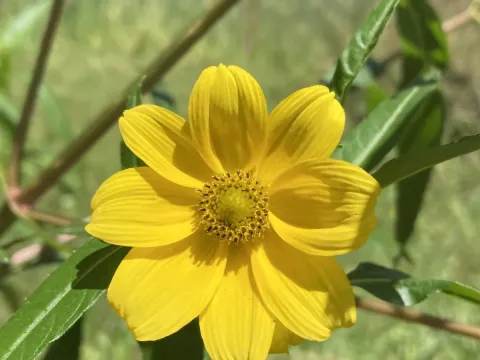
Bur-marigold
Bidens chrysanthemoides
Bur-marigold (Bidens chrysanthemoides) is an annual herbaceous plant belonging to the Asteraceae family. It is distinct due to its preference for aquatic and semi-aquatic habitats, such as wetlands, marshes, and pond edges.
What the section contains
Bur-marigold
The plant thrives in nutrient-rich, moist soils that are capable of holding water for extended periods. It is highly adapted to anaerobic soil conditions often found in swampy regions.
Regarding climate, it requires a temperate environment with significant light exposure to ensure proper flowering and seed maturation throughout the late summer and autumn months.
Agronomic management of this species involves maintaining appropriate moisture levels and ensuring that soil aeration does not drop to levels that completely inhibit root respiration.
Its biological cycle is finely tuned to water level fluctuations, allowing seeds to disperse through water currents, which facilitates colonization of new areas along riparian corridors.
Fungal diseases like powdery mildew and various rusts are the primary threats, especially when the plant is grown in dense stands where air circulation is severely restricted.
Insects such as aphids and spider mites frequently colonize the plants, particularly during periods of environmental stress, leading to a decline in vigor and overall health.
Leaf-eating beetles can cause significant damage to the foliage during the growing season, which may reduce the photosynthetic capacity of the plant.
Root pathogens are a common concern in poorly drained or stagnant water areas, where the lack of oxygen facilitates the development of rot-inducing fungi.
Integrated pest management is recommended to mitigate risks, emphasizing the use of biological controls to protect the surrounding ecosystem and water quality.