
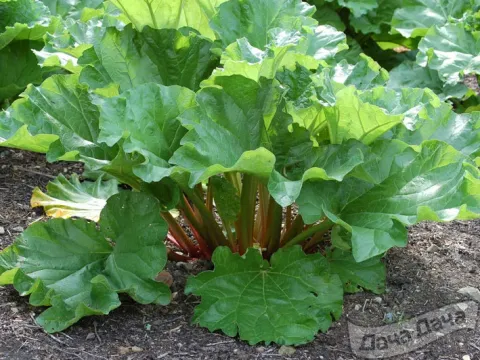
Rheum hybrids
Rheum hybrids
Rheum hybrids, commonly known as rhubarb, belong to the Polygonaceae family. Planting is typically done in early spring or autumn. When planting from seeds, they are sown in nursery beds first, as the plants require at least a year to develop a strong root system before being moved to their permanent location.
What the section contains
Rheum hybrids
The most reliable method for establishing a rhubarb patch is vegetative propagation by dividing established crowns. This ensures that the new plants retain the specific characteristics of the parent variety and mature significantly faster than those grown from seed.
Divisions are performed on healthy, vigorous plants that are between four and five years old. The crown is dug up and carefully divided into segments, ensuring each piece has at least one or two strong, healthy buds and a portion of the root mass.
When transplanting, the soil should be prepared with generous amounts of organic matter. The buds should be set about 5–10 cm below the soil surface to ensure they remain protected while still allowing for easy emergence in the spring.
Proper spacing is crucial for long-term health, as mature rhubarb plants can grow quite large. A spacing of at least 1 meter between plants allows for adequate airflow, which is essential for reducing the risk of fungal infections.
Rhubarb thrives in deep, fertile, and moisture-retentive soils. A site with a pH between 6.0 and 7.0 is ideal. The soil must be well-drained, as constant waterlogging can lead to crown rot, one of the most common issues in rhubarb cultivation.
The climate requirements for rhubarb are modest; it is a cold-hardy plant that benefits from winter chilling. This makes it suitable for many temperate regions, though it struggles in areas with extremely hot and humid summers, which can stress the plant.
Abundant sunlight is necessary for optimal development, although rhubarb can tolerate partial shade in warmer regions to avoid scorching. The amount of light directly impacts the photosynthetic capacity and, consequently, the yield of the petioles.
Water management is vital during the growing season. While rhubarb needs consistent moisture, the water must not be allowed to pool around the base of the plant. Regular mulching can help retain soil moisture and suppress weed competition.
Nutrient management involves applying well-rotted compost or manure in the early spring. This provides a steady supply of nitrogen, which supports the rapid growth of the large, fleshy petioles that are the primary harvestable product.
Yield potential in rhubarb depends on the maturity of the plant and the quality of the growing conditions. A healthy, well-maintained crown can produce a consistent harvest for up to 10 years, depending on the variety and local climate.
The first year of growth should be focused on plant establishment, meaning no harvesting should take place. Harvesting may begin lightly in the second year, but full production capacity is typically reached by the third or fourth year of growth.
An established rhubarb crown can yield between 3 kg and 5 kg of petioles per season. Proper management, including the removal of seed stalks as soon as they appear, prevents the plant from wasting energy on flowers rather than vegetative growth.
When stalks are removed correctly, the plant continues to produce new foliage and stems throughout the season. However, it is important to stop harvesting by mid-summer to allow the plant to store energy for the coming winter and next year's growth.
Industrial yields vary but can reach up to 20–30 tons per hectare in well-managed plantations. Productivity is closely linked to the density of the planting and the frequency of soil amendment throughout the crop's lifecycle.
The most common disease affecting rhubarb is crown rot, often caused by the fungus Phytophthora. It manifests as wilting and collapse of the entire crown, and since it is soil-borne, infected plants should be removed and destroyed immediately.
Leaf spot diseases, such as those caused by Ascochyta species, can create unsightly brown lesions on the foliage. While these rarely kill the plant, they can reduce vigor if the infection is severe, requiring removal of affected leaves.
Pests can include various species of aphids and the rhubarb curculio, a type of snout beetle that drills into the stalks. Regular scouting and maintaining clean surroundings help minimize pest population growth.
Good sanitation is the best defense against threats. Removing dead or diseased leaves at the end of the season prevents pathogens from overwintering in the debris and infecting new growth in the following spring.
Avoiding overcrowding is a key agricultural practice for disease prevention. By ensuring adequate spacing and selecting well-draining sites, the overall pressure from pests and diseases is significantly reduced without needing excessive chemical intervention.
Harvesting is performed by pulling the stalks from the base. A twisting motion is used to detach the petiole, which is preferred over cutting, as leaving stump remnants can increase the risk of decay within the crown.
The harvesting season typically spans from mid-spring until early July. The petioles are ready when they have reached the desired length and thickness, generally around 30 to 45 cm for high-quality culinary use.
It is essential never to remove more than one-third of the total foliage at any given time. The leaves are vital for the plant's health; they generate the sugars that are stored in the roots to sustain the plant through the winter.
Once harvested, the leafy blades are discarded, as they contain high concentrations of oxalic acid and are toxic to humans and pets. Only the succulent, fleshy petioles are processed for consumption.
Post-harvest handling requires quick cooling to maintain shelf life. Rhubarb loses water and wilts rapidly in warm conditions, so storage at near-freezing temperatures is necessary to keep the petioles crisp until they reach the market.