
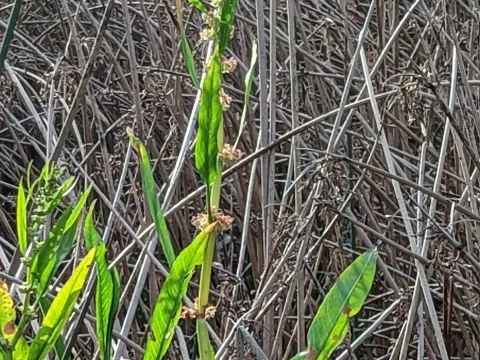
Rumex bidens
Rumex bidens
Rumex bidens is a perennial herbaceous plant belonging to the Polygonaceae family, characterized by its adaptation to specific moist habitats.
What the section contains
Rumex bidens
Seeds should be sown in early spring as soon as the soil reaches temperatures around 5–8 degrees Celsius to ensure healthy germination rates.
Late autumn sowing is also a viable option, allowing seeds to establish before winter and sprout early in the following growing season.
Seeds should be planted at a depth of 1–2 centimeters in soil that retains moisture consistently to support the delicate early development phase.
Once seedlings have produced 3–4 true leaves, it is essential to thin them out, leaving approximately 15 centimeters between plants for optimal growth.
The plant thrives in soils rich in organic matter and maintains high productivity when grown in well-drained but consistently moist conditions.
Ideal soil acidity levels range between pH 5.5 and 6.5, which allows the plant to efficiently absorb necessary micronutrients from the soil profile.
While the plant prefers sunny locations, providing partial shade during peak summer heat can help maintain the tender texture of the leaves.
A balanced regimen of mineral fertilizers in spring and organic compost in autumn is necessary to sustain the vigor of perennial plantings.
The species exhibits excellent cold tolerance and can withstand harsh winter conditions without protective covering, rejuvenating rapidly in spring.
Downy mildew is the most prevalent disease affecting this crop, particularly in environments with high humidity and poor air circulation around the plants.
Rust fungi present as brown spots on the leaves, which significantly degrades the quality and marketability of the harvested green produce.
Common pests include the dock leaf beetle and aphids, which can cause significant damage to young succulent foliage if left untreated.
Implementing crop rotation and regular sanitation by removing plant debris helps mitigate the risk of pathogen accumulation in the soil.
Biological pest control is strongly encouraged, as leafy greens like sorrel can absorb and store chemical residues from synthetic pesticides.
Harvesting begins once the leaves reach their market size, ensuring they remain tender and have not yet begun to develop tough fibrous textures.
Use a sharp knife to cut the leaves about 3–5 centimeters above the soil level, taking care to protect the plant's central growth point.
Depending on weather conditions and fertilization frequency, growers can typically perform between 3 and 5 cuttings during a single season.
Post-harvest care involves immediate irrigation and light nitrogen fertilization to stimulate the plant to regrow foliage quickly after each cut.
All harvesting activity should cease at least one month before the first frost, allowing the plants to accumulate nutrients for successful dormancy.