
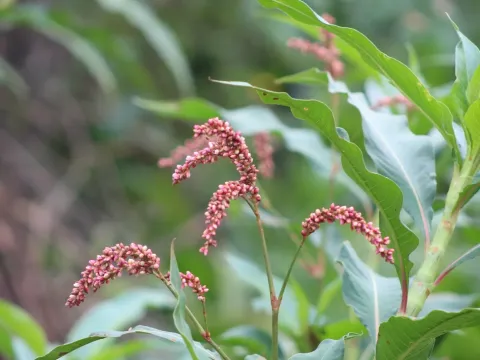
Rusty knotweed
Persicaria ferruginea
Rusty knotweed (Persicaria ferruginea) is a member of the Polygonaceae family, characterized by its preference for wetland habitats. Originating from tropical and subtropical regions, this plant is well-adapted to high-humidity environments, typically found along stream banks, marshes, and periodically flooded areas.
What the section contains
Rusty knotweed
The plant exhibits specific requirements regarding its growing conditions, primarily needing saturated soil or shallow water to thrive. When cultivated, it acts as a robust perennial in warm climates, though it often requires protection against frost in temperate zones, limiting its outdoor lifespan.
Soil structure should be rich in organic matter to support the rapid development of its root system. Ideally, the substrate should maintain a pH level between 5.5 and 7.0. Because of its natural adaptation to aquatic environments, it tolerates low-oxygen soil conditions better than most standard agricultural crops.
Optimal growth occurs under high light intensity, which enhances the plant's characteristic rusty foliage coloration. Proper management of light exposure is critical to maintaining the plant's structural integrity and preventing excessive elongation of the stems, which can occur under insufficient lighting.
Maintenance practices for Persicaria ferruginea involve monitoring for excessive biomass accumulation. As an aggressive grower in suitable conditions, it requires periodic pruning or division to ensure that it does not disrupt the balance of the planted area or overwhelm surrounding vegetation.