
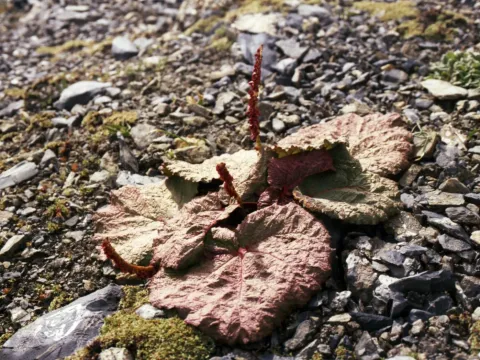
Rheum spiciforme
Rheum spiciforme
Rheum spiciforme, a member of the Polygonaceae family, is a perennial herbaceous plant. Sowing is typically conducted in early spring, once the soil has warmed up to at least 5–10 degrees Celsius, or in late autumn for natural stratification.
What the section contains
Rheum spiciforme
Seeds are sown at a depth of 2–3 centimeters, with rows spaced 60–80 centimeters apart to accommodate the large leaf rosettes. For indoor propagation, seeds can be started in trays during March and transplanted outdoors after the frost risk passes.
Providing adequate space for each plant is crucial, as Rheum spiciforme is a long-lived perennial that can remain productive on the same site for over a decade. Seedlings usually emerge within two to three weeks under optimal moisture conditions.
Soaking the seeds in lukewarm water for 24 hours prior to sowing can significantly improve germination rates. It is advisable to use fresh seeds, as their viability tends to decline after three to four years of storage.
The optimal temperature for seed germination ranges between 18 and 20 degrees Celsius. Proper seedling care during the first year is vital, as the plant focuses primarily on root system development.
Originating from the high-altitude regions of Central Asia, such as the Himalayas and Tibet, this species is exceptionally cold-hardy. It thrives in open, sunny locations but can tolerate partial shade during intense heat.
The soil must be fertile, deep, and well-drained, as the fleshy rhizomes are prone to rot in waterlogged conditions. A neutral or slightly acidic soil pH is ideal for promoting healthy growth.
Regular applications of organic compost or manure are highly beneficial for maintaining productivity. During the growing season, consistent moisture is required, especially during dry spells, to keep the stalks succulent.
The plant has evolved to store nutrients in its thick stalks, which are its primary agricultural asset. In temperate climates, Rheum spiciforme does not require special winter protection due to its inherent resilience.
Weed control is essential, particularly in the first few years, to prevent competition for nutrients and water. Gentle cultivation around the root zone is recommended to avoid damaging the buds.
Fungal diseases, including leaf spot and ascochyta blight, are the most significant threats, especially in humid and stagnant air conditions. Improving spacing between plants can help reduce the prevalence of these issues.
Pests such as rhubarb weevils and aphids can cause damage to leaves and stems. Integrated pest management, including the removal of affected tissues, is often sufficient to control these infestations.
Root rot is typically caused by poor drainage and can be fatal to the plant. Site selection should prioritize areas that do not accumulate spring meltwater or heavy rainfall.
Aphids are a common annoyance; however, natural remedies such as neem oil or garlic-based sprays can be used to manage them effectively without harsh chemicals.
Regular inspection of the foliage is recommended to catch infections early. In severe cases, approved fungicides may be used, but always adhere to harvest interval guidelines before consumption.
Harvesting should not begin until the third year of growth to ensure the plant has established a robust root system. Stalks are best harvested by gently pulling and twisting them from the base to avoid damaging the crown.
The harvest season generally falls between late spring and early summer. It is recommended to harvest no more than one-third of the total stalks per plant at any given time to keep the plant vigorous.
In culinary applications, the stalks are used in desserts, jams, and compotes. Their distinct acidity provides a refreshing flavor profile that is highly prized in various regional cuisines.
Beyond culinary use, parts of the plant, particularly the roots, have historically been utilized in traditional medicine for their digestive properties. Leaves should never be consumed due to high levels of oxalic acid.
The harvest season typically ends by mid-July, allowing the plant enough time to accumulate energy for winter dormancy. Freshly harvested stalks should be kept in a cool, dark place to maintain their texture.