
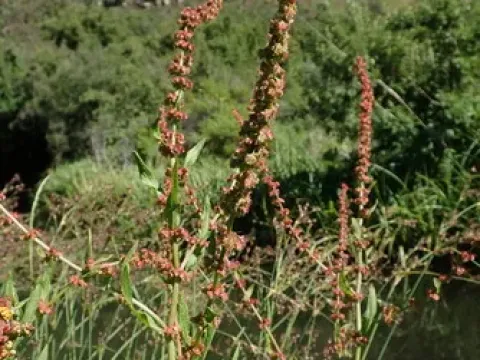
Rhodesian sorrel
Rumex rhodesius
Rhodesian sorrel is a perennial herbaceous plant belonging to the Polygonaceae family. Sowing is typically carried out in early spring as soon as the soil is workable, or in late autumn, allowing the seeds to undergo natural stratification, which improves germination rates in the spring.
What the section contains
Rhodesian sorrel
The seeds should be sown at a shallow depth of approximately 1–2 centimeters, ensuring firm contact with moist soil. This depth is ideal for maintaining the necessary humidity levels for the embryo to activate and emerge through the soil surface efficiently.
Proper spacing is crucial for long-term productivity; rows should be spaced 30–45 centimeters apart. This configuration provides enough room for the plants to establish a robust rosette of leaves while allowing sufficient airflow to minimize the risk of humidity-related diseases.
During the first year, Rhodesian sorrel develops its root system slowly. It is essential to keep the seedbed free of weeds, as the young seedlings are not highly competitive. Using fresh, high-germination seeds significantly increases the likelihood of a dense and uniform stand.
Adding organic matter such as well-rotted compost to the soil prior to planting creates a nutrient-rich environment. This improves soil structure and water-holding capacity, which are vital for a crop that relies on consistent growth across multiple harvest cycles.
This crop performs best in well-lit locations but can tolerate partial shade, making it adaptable to various garden settings. It requires fertile, moist soil that is rich in humus to support continuous leaf production throughout the growing season.
Rhodesian sorrel is well-adapted to cooler climates and demonstrates excellent winter hardiness. It can survive harsh winter temperatures in open soil, provided that the growing point is sufficiently protected, making it a reliable perennial choice for many regions.
Soil pH should ideally be near neutral. If the soil is too acidic, liming is recommended before planting to enhance nutrient availability. Proper drainage is also important, as the plant needs moisture but does not thrive in waterlogged or swampy conditions.
Consistent irrigation is vital, particularly during the peak of summer when transpiration rates are high. Drip irrigation systems are highly effective for this crop, as they maintain steady soil moisture without wetting the foliage, thus reducing the risk of fungal infections.
Soil aeration is a key agronomic practice; regular hoeing between the rows helps to break the crust, improve oxygen access to the roots, and eliminate competing weeds. These simple practices significantly enhance the plant's metabolic activity and regrowth potential.
The yield of Rhodesian sorrel is directly proportional to the frequency of harvests and the level of management. Under good conditions, multiple cuttings can be made throughout the growing season, starting from early spring and continuing until late autumn.
Peak yields are typically observed during the second and third years of the plant's life, when the root system is fully mature and the foliage rosette is most vigorous. With proper nitrogen management after each cutting, growers can maximize the total biomass harvested.
Preventing the plant from bolting (sending up flower stalks) is essential for maintaining yield and quality. Once the plant enters its reproductive stage, the leaves become tougher and more acidic, which makes them less desirable for culinary use and reduces market value.
The economic lifespan of a Rhodesian sorrel plantation is typically 4–5 years. After this period, the plants may start to show signs of overcrowding and reduced vitality, signaling the need for renovation or moving the crop to a new site in the rotation cycle.
Total annual production per square meter varies based on soil fertility and irrigation schedule. Agronomists recommend a balanced approach to fertilization, focusing on nitrogen for leaf development and potassium to ensure the plants stay healthy and stress-resistant.
Downy mildew is a major threat, particularly during periods of high humidity and moderate temperatures. It manifests as discolored patches on the leaves, severely affecting the aesthetic and nutritional quality of the crop if left unchecked.
The sorrel leaf beetle is a common pest that can cause significant damage to the leaf blade by feeding on the tissue. Vigilant monitoring and the use of insect-safe measures or manual collection are necessary to keep pest populations below the economic damage threshold.
Rust is another fungal disease often encouraged by poor air circulation and excessive moisture. It appears as brown pustules on the leaves, which can spread rapidly throughout the plot if conditions remain favorable for fungal growth.
Aphids may infest the young, succulent shoots during drought conditions, leading to leaf deformation and stunting of growth. Integrated pest management, focusing on early detection and biological control methods, is the most sustainable approach for managing these pests.
Preventive measures include keeping the planting area clean, ensuring proper spacing between plants, and adhering to strict crop rotation schedules. These steps reduce the buildup of soil-borne pathogens and ensure a healthier, more productive perennial stand.
Harvesting should commence when the leaves reach a standard marketable size. Leaves are cut 3–5 centimeters above the soil level using a sharp knife, taking care to avoid damaging the crown, which contains the buds for future regrowth.
The optimal time for harvest is early morning when the leaves are turgid and contain maximum moisture. Immediate cooling after harvest is essential to prevent wilting and to preserve the freshness and flavor profile of the sorrel leaves.
For short-term storage, the harvested leaves should be placed in well-ventilated, clean containers. In refrigerated environments at 1–2 degrees Celsius, the leaves can be kept for up to a week, provided they are not excessively packed or crushed.
The final harvest of the season should be timed to allow the plant to recover and store nutrients for the winter dormancy period. Avoiding overly aggressive late-season cutting ensures that the root system has sufficient reserves to survive the cold and initiate growth in spring.
Post-harvest care involves loosening the soil and, if necessary, providing a light irrigation to help the plants recover from the mechanical stress of cutting. This helps maintain the vitality of the plantation and ensures consistent yields for many years to come.