
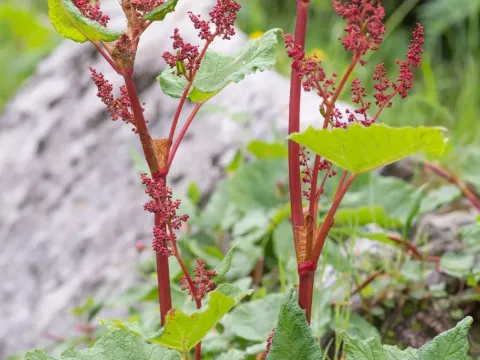
Rheum acuminatum
Rheum acuminatum
The propagation of Rheum acuminatum is primarily achieved through seeds, which should be sown in early spring as soon as soil warms up.
What the section contains
Rheum acuminatum
For more predictable results, sowing in seed trays or nursery pots is recommended to protect emerging seedlings from environmental stressors.
Seeds are typically placed at a depth of 2 to 3 centimeters, ensuring the soil remains consistently moist throughout the germination process.
Once seedlings reach a stage with several true leaves, they can be transplanted to their permanent location with adequate spacing of 80 centimeters.
Initial establishment takes time, and the first year of growth is dedicated to root system development rather than leaf production.
Rheum acuminatum belongs to the Polygonaceae family and is recognized for its preference for cool, mountain-influenced climate conditions.
The plant thrives in deep, fertile, and well-draining loamy soils that are rich in organic matter and maintain a slightly acidic pH.
While it is resilient to colder temperatures, the plant requires consistent moisture levels to support its large, succulent foliage production.
Full sun to partial shade is ideal, as excessive heat can lead to early dormancy and reduced overall biomass of the plant.
Adding organic compost or well-rotted manure during the dormant season helps maintain soil structure and provides necessary nutrients.
The primary yield consists of thick, fleshy petioles that are often utilized in culinary applications, similar to common garden rhubarb.
Yield capacity significantly increases as the plant matures, with peak production cycles occurring between the third and fifth years of life.
Proper harvest management is essential, as stripping the plant too heavily can weaken the crown and reduce yields in subsequent growing seasons.
The succulent nature of the stalks makes them highly valued, but growers must balance harvest intensity with the plant's need for recovery.
In addition to culinary use, the species has been noted in traditional practices for the phytochemical properties of its root system.
Common issues include fungal infections such as leaf spot, which are often exacerbated by poor air circulation and excessive humidity levels.
Root rot represents a significant risk if the planting area does not have proper drainage, especially during periods of heavy precipitation.
Pests like aphids can infest the underside of leaves, causing stunted growth and potentially transmitting viral diseases to the plant.
Slugs and snails often feed on young shoots in the spring, requiring physical barriers or organic deterrents for adequate protection.
Maintaining a clean growing area by removing decaying plant matter is a primary step in preventing the spread of common garden pathogens.
Harvesting should be avoided during the first two years of the plant's life to ensure the root system is sufficiently robust.
The traditional method involves pulling the petiole at the base with a twisting motion, ensuring the crown remains undamaged.
It is important to leave enough foliage on the plant to maintain photosynthesis, which is critical for winter survival and energy storage.
The harvest season generally concludes by mid-summer, allowing the plant enough time to regenerate energy before the onset of the cold season.
Post-harvest care involves keeping the stalks cool and away from direct sunlight to prevent wilting and maintain freshness for consumption.