
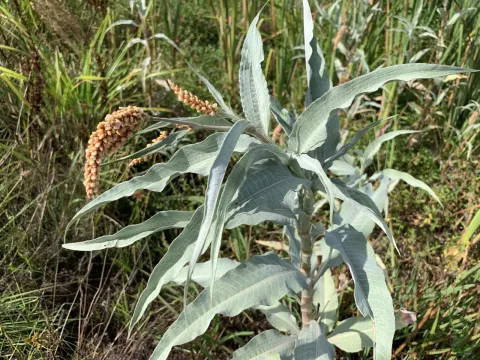
Senegal smartweed
Persicaria senegalensis
Senegal smartweed (Persicaria senegalensis) is a perennial herbaceous plant belonging to the Polygonaceae family. It is widely distributed across tropical Africa, often found thriving in aquatic and riparian environments, such as riverbanks and marshlands.
What the section contains
Senegal smartweed
The plant demonstrates significant physiological adaptation to waterlogged soils. It prefers nutrient-rich substrates, such as silt or heavy loam, which provide the necessary minerals to sustain its rapid growth cycle and expansive root system.
Climatic requirements are strictly centered around tropical conditions. The plant excels in environments with high humidity and consistent warmth, ideally maintaining temperatures above 20°C throughout the growing season to prevent stunted development.
For agricultural cultivation, managing the water level is critical. As a hydrophyte, Persicaria senegalensis requires consistent moisture, and irrigation systems must be designed to mimic its natural flood-prone habitat to ensure optimal health.
Propagation is typically achieved through seeds or stem cuttings. Given the right conditions, the plant can establish quickly, providing substantial biomass that is often utilized in local traditional applications or as ground cover in managed wetland projects.
The plant is susceptible to various common agricultural pests. Aphids represent a significant threat to young leaves, often causing curling and reduced photosynthetic capacity, which directly impacts the plant's overall growth rate.
Fungal infections, particularly leaf spot diseases, are prevalent in high-humidity cultivation settings. These pathogens thrive when air circulation is limited, necessitating careful spacing and canopy management to maintain plant health.
Root-knot nematodes can also pose a serious challenge, especially in soil-based systems. These microscopic pests attack the root system, causing nutrient deficiencies and weakening the plant's structural integrity over time.
Effective management strategies include the implementation of integrated pest management (IPM) practices. Monitoring programs should be prioritized to detect pest pressure early and allow for targeted, minimal-chemical interventions.
Cultural practices, such as removing debris and avoiding over-fertilization with nitrogen, are essential preventive measures. A robust plant architecture and clean growing environment are the first lines of defense against both biotic and abiotic stresses.