
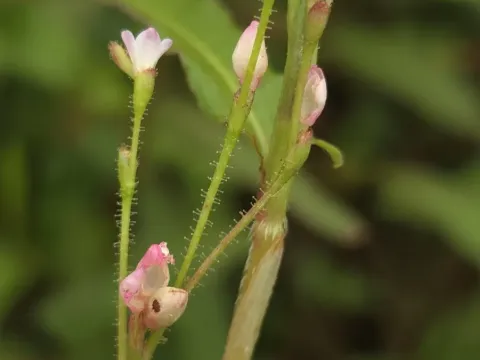
Persicaria praetermissa
Persicaria praetermissa
Persicaria praetermissa belongs to the Polygonaceae family and is known for its distinct semi-aquatic growth habit. This perennial herb originates from Southeast Asia, thriving in tropical and subtropical climates where moisture is abundant throughout the year.
What the section contains
Persicaria praetermissa
The plant is botanically characterized by its creeping stems that produce roots at the nodes. Its leaves are lance-shaped, often displaying intense ruby or reddish tones, which makes it a sought-after species for botanical collections and specialized agricultural landscaping.
Agricultural success depends on providing a consistently wet or waterlogged soil profile. The plant performs best in locations with high ambient humidity and moderate temperatures, as it is highly sensitive to frost and extreme cold, which can terminate its growth cycle.
Soil requirements involve a rich, organic-based medium with an acidic to neutral pH level. Proper site selection includes areas near water bodies or fields equipped with high-capacity irrigation systems, as the crop lacks significant drought tolerance mechanisms.
When cultivating this species, it is essential to monitor light exposure, as deep shade can reduce the characteristic color intensity of the foliage. Proper spacing should be maintained during planting to ensure air circulation and prevent the development of stagnant water conditions.
The primary threats to Persicaria praetermissa are fungal pathogens, specifically those causing root rot and leaf spotting. These conditions are typically exacerbated by poor water quality and lack of soil oxygenation, necessitating strict adherence to irrigation management practices.
Pests like spider mites and aphids represent a significant challenge during the warmer months of the growing season. Integrated pest management strategies, including the introduction of beneficial insects or the use of mild horticultural soaps, are recommended for maintaining plant health.