
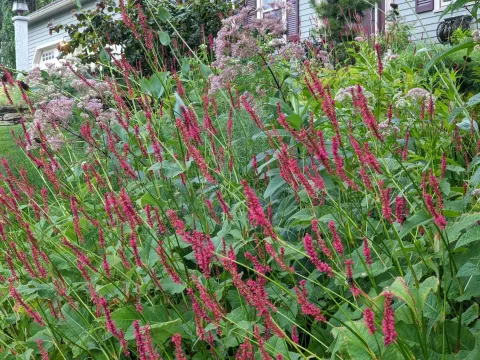
Persicaria hybrids
Persicaria hybrids
Persicaria hybrids belong to the Polygonaceae family and are valued in ornamental agriculture for their vigorous growth and architectural presence. These hybrids are derived from several wild species, resulting in plants that are exceptionally resilient and visually striking in landscape design.
What the section contains
Persicaria hybrids
The culture thrives in environments that provide consistent moisture. They are naturally adapted to damp soils, making them suitable for garden areas that maintain higher humidity levels or have slightly heavier soil textures, which many other ornamentals struggle with.
Soil requirements focus on fertility and organic matter content. For optimal development, the soil should be rich in humus, which ensures the plant has the necessary energy to produce its characteristic tall, plume-like inflorescences throughout the season.
Climate adaptability is a major strength of these hybrids. They generally exhibit strong hardiness against winter temperatures and can be grown across various hardiness zones. Protection from harsh, drying winds is recommended to maintain the integrity of their broad foliage.
Maintenance is relatively straightforward and consists primarily of seasonal pruning. In late autumn, all stems should be cut back to the ground level, which clears the way for vigorous new spring growth and minimizes the overwintering of potential pathogens.
Fungal infections remain the primary threat to Persicaria hybrids, particularly powdery mildew, which can appear if there is poor air movement or excessive overhead moisture during hot spells. Maintaining proper spacing between plants is the best preventative strategy.
Pests such as aphids may occasionally colonize the soft, rapidly growing stems in early summer. While they rarely cause permanent damage to a mature, established plant, infestations should be monitored to prevent the spread of viral agents.
Root rot is a potential concern in sites with poor drainage, especially during wet winters. Ensuring the planting site has adequate structure and permeability helps to prevent anaerobic conditions that favor root pathogens.
Chemical control measures should be applied according to standard agricultural safety protocols. Selective fungicides are effective against fungal outbreaks, while systemic insecticides can be used for persistent pest pressure.
Cultural practices, including mulching and regular inspection, constitute the backbone of an effective plant protection strategy. By ensuring the plant remains vigorous through proper fertilization, the risk of significant damage from pests and diseases is greatly reduced.