
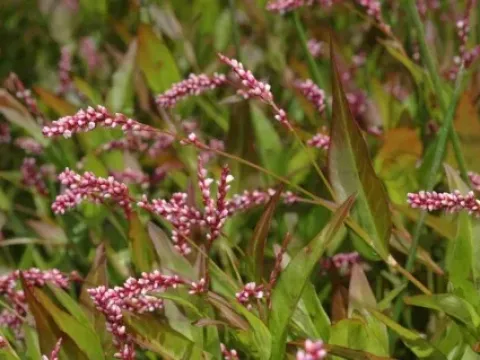
Persicaria salicifolia
Persicaria salicifolia
Persicaria salicifolia, a member of the Polygonaceae family, is a perennial herbaceous plant that thrives in moist and well-structured environments. Sowing should be initiated in the spring once soil temperatures consistently reach 10-12 degrees Celsius.
What the section contains
Persicaria salicifolia
Direct seeding is typically performed in prepared, moisture-retentive seedbeds, ensuring that seeds are covered with a thin layer of soil to protect them while allowing for adequate light penetration.
Seed stratification may be required in some environments to improve germination rates, especially for those seeds collected in late autumn and stored through the winter season.
For industrial cultivation, spacing between rows should be set at approximately 50 to 60 centimeters, providing enough space for the plant's aggressive root system and lateral branching.
Transplanting seedlings started in greenhouse conditions is an efficient strategy to ensure uniformity in the field and to minimize the risks associated with adverse early-season weather.
The plant has a high water requirement and performs exceptionally well in riparian areas, wetlands, or soils that maintain a consistent high moisture content throughout the year.
Regarding soil preferences, it favors nutrient-rich, loamy soils with high organic matter content, which facilitate the rapid development of vegetative biomass.
Optimal growth is achieved in temperature ranges between 18 and 25 degrees Celsius, with the species demonstrating high resilience to typical regional climate fluctuations.
Sunlight exposure is critical for the secondary metabolism of the plant, meaning that cultivation sites should be chosen for their full-sun exposure to maximize quality.
Effective agronomic management requires diligent weed control during the establishment phase, as the plant can be sensitive to competition for nutrients in its early growth stages.
The primary economic focus of cultivating this species is the production of biomass for the pharmaceutical and nutraceutical industries, which value its chemical profile.
Yield is highly dependent on nitrogen and phosphorus availability, which should be managed through precise fertilization schedules to support intense leaf production.
Multiple harvests can be conducted within a single growing season if the conditions are favorable and the plants are managed with appropriate cutting heights and recovery periods.
Standardizing the harvest time relative to the plant's phenological stage is essential to ensure that the yield contains the highest possible concentrations of bioactive compounds.
Post-harvest management involves rapid drying under controlled conditions to prevent degradation and to ensure the final product meets commercial quality specifications.
Persicaria salicifolia can be susceptible to fungal pathogens such as powdery mildew, particularly when plants are grown in overcrowded conditions or areas with poor air circulation.
Pests including aphids and certain leaf-eating larvae can cause aesthetic damage and reduced biomass production, especially during hot and humid spells in the mid-summer.
Integrated Pest Management (IPM) strategies, including the use of beneficial insects and crop rotation, are recommended to maintain ecological balance without heavy chemical inputs.
Ensuring adequate space between plants is a primary preventive measure against disease, as it reduces humidity levels within the canopy and improves airflow.
Regular field scouting is crucial for detecting early signs of stress or infestation, allowing for localized interventions before problems spread throughout the entire crop area.
Harvesting is performed using specialized equipment designed for leafy crops, ensuring that the stems are cut at an optimal distance above the ground to promote regrowth.
The ideal window for harvesting is at the pre-flowering stage, as this timing provides the best balance between overall biomass quantity and the quality of chemical constituents.
Timing the harvest for dry weather, ideally in the morning after the dew has evaporated, is critical to maintaining the integrity of the harvested material during transportation.
Effective logistics are necessary to move the biomass to processing facilities within a few hours of harvesting to prevent overheating and fermentation of the moist plant material.
Clean harvesting practices are mandatory to eliminate soil contamination and ensure the purity of the raw material, which is a major factor for pharmaceutical-grade standards.