
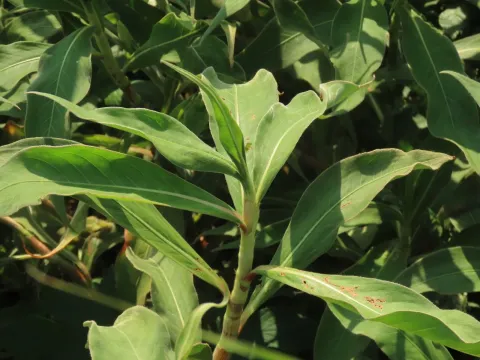
Persicaria pulchra
Persicaria pulchra
Persicaria pulchra belongs to the Polygonaceae family. It is a perennial herbaceous plant known for its adaptability to wet, riparian environments and marshy habitats.
What the section contains
Persicaria pulchra
The plant is characterized by its long, lanceolate leaves and tall, sturdy stems. It plays a significant role in ecosystem restoration and is often used in landscape design for water edges.
Cultivation requirements include a consistent moisture supply and fertile, organic-rich soil. It thrives best in warm climates where sunlight is abundant, though it shows moderate tolerance for partial shade.
Soil management is crucial; the plant prefers a slightly acidic to neutral pH. Proper soil aeration is essential to prevent root asphyxiation in waterlogged conditions.
Economically, the species is recognized for its potential in phytoremediation, as it helps in absorbing excess nutrients and heavy metals from wetland areas.
The most common disease threats include fungal infections such as leaf spots, which thrive in stagnant, humid environments with poor air circulation.
Rust pathogens can also impact the vigor of the plant, manifesting as powdery or rusty lesions on the undersides of the foliage during the peak growing season.
Insects like aphids and various leaf-chewing beetles represent the primary pest risks, causing physical damage that stunts the plant's overall growth.
Effective pest management involves regular monitoring and integrated pest management (IPM) strategies to avoid excessive chemical use near water sources.
Ensuring proper spacing and sanitation practices are the best preventive measures against widespread infestations in large-scale plantings.