
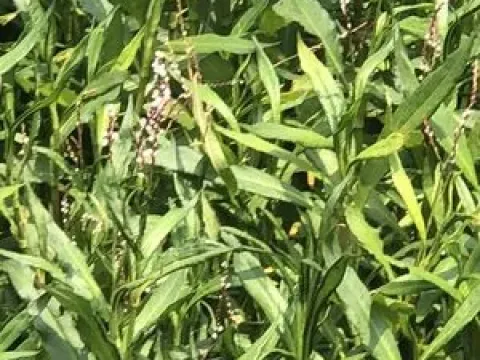
Persicaria maackiana
Persicaria maackiana
Persicaria maackiana is a perennial herbaceous plant belonging to the Polygonaceae family. It is native to the Far East, specifically regions of Russia, China, and the Korean Peninsula, where it thrives in wetlands.
What the section contains
Persicaria maackiana
This species is highly valued for its adaptability to damp environments. It performs best in nutrient-rich soils that retain moisture consistently, making it ideal for areas near water features.
In terms of climate, Persicaria maackiana is remarkably cold-hardy. It is well-adapted to the seasonal extremes of its native range, showing excellent resilience during harsh winter conditions.
Cultivation requires careful site selection. Although it can tolerate partial shade, providing adequate light exposure encourages more vigorous growth and denser foliage development throughout the season.
The botanical structure includes distinct elongated leaves and small, terminal inflorescences. Its growth habit is typically clump-forming, which contributes to its utility in soil stabilization.
The primary threats to Persicaria maackiana involve fungal pathogens that thrive in consistently damp environments. Poor air circulation often exacerbates these issues, leading to foliage blight.
Leaf spot diseases are common, appearing as irregular patches on the leaves. These can spread quickly if the density of the planting is too high, necessitating thinning of the stands.
Insect pests such as aphids and spider mites may target the plant, especially during dry spells or late summer, causing curling of the leaves and stunted growth.
Integrated pest management is recommended, focusing on maintaining plant health through proper spacing and moisture control rather than relying solely on chemical treatments.
Cultural practices, such as removing debris and dead foliage after the growing season, are essential to minimize the overwintering of pathogens and insect eggs in the soil.