

Reference · Crops
Grasses
Grasses (Latin: Poaceae) form one of the most important plant families in agriculture, encompassing vital cereal crops like wheat, rice, maize, barley, and oats. These monocotyledonous plants are the foundation of global food security, providing essential grains for human consumption, livestock feed, and diverse industrial raw materials such as biofuel and textiles.
1 797
sections
What the section contains
 Bamboo
Bambusa
14 items
Bamboo
Bambusa
14 items
 Barley Mitchell grass
Astrebla elymoides
Barley Mitchell grass
Astrebla elymoides
 Barnyard grass
Echinochloa P. Beauv.
5 items
Barnyard grass
Echinochloa P. Beauv.
5 items
 Barnyard grass
Echinochloa
16 items
Barnyard grass
Echinochloa
16 items
 Barter's lovegrass
Eragrostis barteri
Barter's lovegrass
Eragrostis barteri
 Barth's rice
Oryza barthii
Barth's rice
Oryza barthii
 Bashania
1 item
Bashania
Bashania
1 item
 Basket grass
Oplismenus hirtellus
Basket grass
Oplismenus hirtellus
 Basque fescue
Festuca vasconcensis
Basque fescue
Festuca vasconcensis
 Bear Poa
Poa ursina
Bear Poa
Poa ursina
 Bearded couch
Elymus caninus
Bearded couch
Elymus caninus
 Bearded feather grass
Stipa barbata
Bearded feather grass
Stipa barbata
 Becker's fescue
Festuca beckeri
Becker's fescue
Festuca beckeri
 Beneken's brome
Bromus benekenii
Beneken's brome
Bromus benekenii
 Bentgrass
Agrostis perennans
Bentgrass
Agrostis perennans
 Berg's Millet
Panicum bergii
Berg's Millet
Panicum bergii
 Berger's lovegrass
Eragrostis bergeriana
Berger's lovegrass
Eragrostis bergeriana
 Bermuda grass
Cynodon
6 items
Bermuda grass
Cynodon
6 items
 Bermuda grass
Cynodon maritimus
Bermuda grass
Cynodon maritimus
 Bertero barley
Hordeum berteroanum
Bertero barley
Hordeum berteroanum
 Bewsia
1 item
Bewsia
Bewsia
1 item
 Big bluegrass
Poa ampla
Big bluegrass
Poa ampla
 Big-bristle wheatgrass
Elymus multisetus
Big-bristle wheatgrass
Elymus multisetus
 Big-spike bristlegrass
Setaria macrostachya
Big-spike bristlegrass
Setaria macrostachya
 Bitter panicgrass
Panicum amarulum
Bitter panicgrass
Panicum amarum
Black Muhly
Muhlenbergia nigra
Bitter panicgrass
Panicum amarulum
Bitter panicgrass
Panicum amarum
Black Muhly
Muhlenbergia nigra
 Black speargrass
Heteropogon melanocarpus
Black speargrass
Heteropogon melanocarpus
 Black-eyed fescue
Festuca melanopsis
Black-eyed fescue
Festuca melanopsis
 Black-nerved millet
Panicum bisulcatum
Black-nerved millet
Panicum bisulcatum
 Black-seeded bristlegrass
Setaria acromelaena
Black-seeded bristlegrass
Setaria acromelaena
 Blepharidachne
1 item
Blepharidachne
Blepharidachne
1 item
 Blepharoneuron
1 item
Blepharoneuron
Blepharoneuron
1 item
 Blue fescue
Festuca cinerea
Blue fescue
Festuca cinerea
 Blue grama
Bouteloua dactyloides
Blue grama
Bouteloua dactyloides
 Blue oat grass
Helictotrichon sempervirens
Blue oat grass
Helictotrichon sempervirens
 Blue tussock
Poa colensoi
Blue tussock
Poa colensoi
 Blue wildrye
Elymus glaucus
Blue wildrye
Elymus glaucus
 Bluestem
Andropogon
5 items
Bluestem
Andropogon
5 items
 Boeotian wheat
Triticum boeoticum
Border's fescue
Festuca borderei
Boeotian wheat
Triticum boeoticum
Border's fescue
Festuca borderei
 Bosnian fescue
Festuca bosniaca
Bosnian fescue
Festuca bosniaca
 Bothriochloa
4 items
Bothriochloa
Bothriochloa
4 items
 Bothriochloa biloba
Bothriochloa erianthoides
Bothriochloa erianthoides
Bothriochloa biloba
Bothriochloa biloba
Bothriochloa erianthoides
Bothriochloa erianthoides
 Bothriochloa laguroides
Bothriochloa laguroides
Bothriochloa laguroides
 Bothriochloa macra
Bothriochloa radicans
Bothriochloa radicans
Bothriochloa macra
Bothriochloa macra
Bothriochloa radicans
Bothriochloa radicans
 Bothriochloa woodrovii
Bothriochloa woodrovii
Bothriochloa woodrovii
 Bouteloua
8 items
Bouteloua
Bouteloua
8 items
 Bouteloua aristidoides
Bouteloua aristidoides
Bouteloua aristidoides
 Bouteloua barbata
Bouteloua disticha
Bouteloua disticha
Bouteloua barbata
Bouteloua barbata
Bouteloua disticha
Bouteloua disticha
 Bouteloua eludens
Bouteloua eludens
Bouteloua eludens
 Bouteloua filiformis
Bouteloua heterostega
Bouteloua heterostega
Bouteloua filiformis
Bouteloua filiformis
Bouteloua heterostega
Bouteloua heterostega
 Bouteloua megapotamica
Bouteloua megapotamica
Bouteloua megapotamica
 Bouteloua pilosa
Bouteloua pilosa
Bouteloua pilosa
 Bouteloua simplex
Bouteloua simplex
Bouteloua simplex
 Brachiaria
 (Trin.) Griseb.
Brachiaria
Brachiaria (Trin.) Griseb.
Marketplace
Products in this section · 12





Биоорганическое нано удобрение "НАГРО" / "NAGRO"
LLC NPO "BIOPLAN"
Fertilizers
43
25
1 offer
37.63 €за л
Buy


Grasses
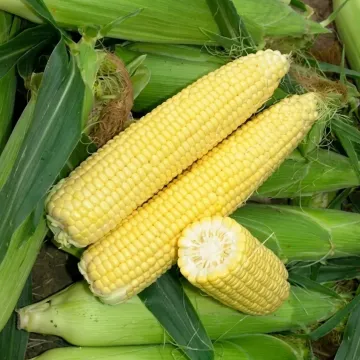
Botanically, grasses are characterized by fibrous root systems, jointed stems known as culms, and leaves with parallel venation. Their flowers are typically arranged in spikelets, forming complex inflorescences like spikes or panicles. The fruit is a caryopsis, a type of grain in which the fruit wall is fused to the seed coat, distinguishing them from other botanical fruits.
The distribution of grasses is worldwide, ranging from equatorial regions to subarctic zones. This adaptability is the result of long-term natural evolution and centuries of selective breeding. Most cultivated grasses originated in fertile valleys of the Near East, East Asia, and the Americas, where ancient civilizations first practiced sedentary agriculture.
Agronomic requirements depend on the specific species, though most grasses thrive in well-drained soils rich in nitrogen, phosphorus, and potassium. Crop management practices include soil tillage, strategic fertilization, and adherence to crop rotation cycles to maintain soil health. Irrigation is essential for high-yield species like rice, while others are adapted to rain-fed farming systems.
Key challenges in cultivation include fungal pathogens like rusts, smuts, and mildews, alongside insect pests such as aphids, stem borers, and locusts. Integrated Pest Management (IPM) strategies, involving the use of resistant crop varieties, biological control, and judicious pesticide application, are essential for ensuring sustainable yields and optimal grain quality.
- Cereals: primary grains for food production.
- Forage grasses: critical for livestock pastures and silage.
- Turf and ornamental grasses: significant for landscaping and soil erosion control.