
Bothriochloa woodrovii
Bothriochloa woodrovii
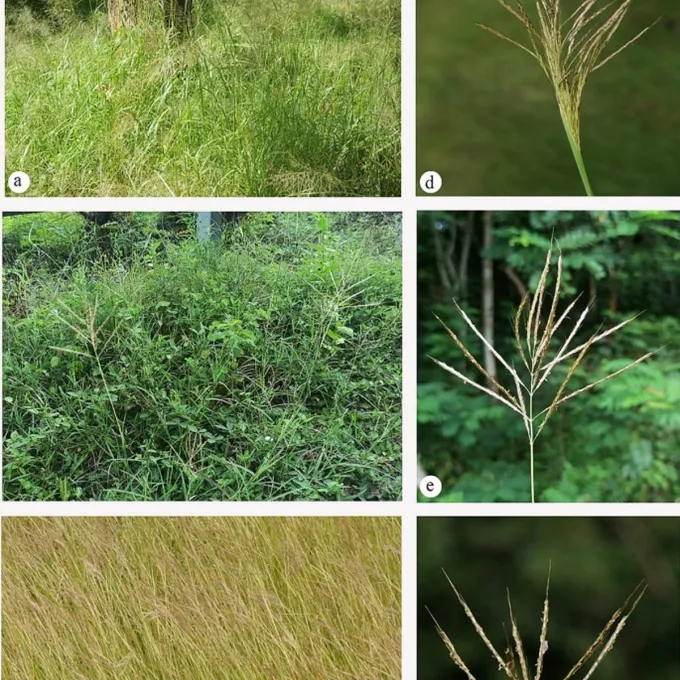
Description
Sowing dates
Bothriochloa woodrovii is a perennial grass belonging to the Poaceae family, known for its resilience in native environments. In agricultural settings, sowing is typically timed with the onset of the rainy season to ensure sufficient soil moisture for germination.
The seeds of this species demonstrate high natural regeneration capacity under favorable conditions; however, for establishing a uniform stand, row planting with 30–45 cm spacing is recommended.
Sowing depth should be kept minimal because the seeds are small and require adequate light exposure to trigger germination processes effectively. The optimal time for planting occurs when average soil temperatures reach 20–25 degrees Celsius.
After seeding, it is advisable to lightly compact the soil to improve contact between the seeds and the substrate, which is a critical factor in arid regions where topsoil dries out rapidly.
The crop shows high adaptability to various crop rotation schemes, though it is most effective when used as a component of permanent pasture mixtures due to its longevity as a stand-forming plant.
Growing requirements
This drought-tolerant grass originates from tropical and subtropical regions, predominantly found in India. It performs best in well-drained soils of varying textural compositions.
The plant exhibits excellent tolerance to high temperatures, making it a promising candidate for cultivation in areas prone to prolonged dry spells and intense solar radiation.
Bothriochloa woodrovii does not tolerate waterlogging or stagnant water in fields, therefore selecting a site with natural drainage or light soil texture is crucial for successful establishment.
The crop possesses an extensive root system, allowing it to efficiently extract moisture from deeper soil layers, which reduces the need for supplemental irrigation in production cycles.
The optimal pH range for this grass is slightly acidic to neutral, although the plant is capable of adapting to slightly saline soils, which expands its potential cultivation area.
Yield
The productivity of Bothriochloa woodrovii directly depends on the level of mineral nutrition and the grazing regime if used for livestock. Under favorable conditions, it forms a dense, productive turf.
The green mass of the plant contains a balanced complex of nutrients, making it a valuable source of fodder for herbivores, especially during critical periods of summer green feed deficiency.
To maintain stable yields, periodic mowing is recommended, which stimulates tillering and prevents the plant from reaching the coarse, late generative stage of development.
Average dry matter yields vary depending on regional climatic conditions, yet with proper management, the crop shows consistent performance that exceeds many wild-growing alternatives.
The application of small doses of nitrogen fertilizers in the spring can significantly increase vegetative mass, although over-fertilization should be avoided to prevent susceptibility to lodging.
Main diseases and pests
Like most grass species, Bothriochloa woodrovii can be susceptible to rust and various fungal diseases, especially in dense stands with high relative humidity.
The main pests for this crop include various species of insects that feed on plant sap or damage generative organs, which may negatively impact seed yield potential.
To control diseases, it is recommended to maintain a proper grazing regime and timely removal of old vegetation, where pathogens often accumulate and harmful insects overwinter.
The use of chemical protection agents must be strictly regulated, as the primary value of the crop lies in its use as pasture forage for livestock.
Preventive measures include the use of high-quality, cleaned seed material and maintaining optimal plant density, which prevents the development of disease clusters.
Harvesting
Hay harvesting is carried out at the beginning of the heading stage, when the plant possesses maximum nutritional value and has not yet accumulated excess lignin in its stems.
During haymaking, it is important to ensure rapid drying of the mowed mass, as prolonged exposure to direct sunlight can lead to a loss of carotene and other essential vitamins.
If Bothriochloa woodrovii is used in pastures, a key management practice is rotational grazing, where livestock are moved between paddocks to prevent overgrazing of the growth points.
When harvesting for seeds, the process should occur at full biological maturity, indicated by a change in panicle color and the beginning of natural seed shattering.
Storage of harvested hay should be in ventilated structures protected from rainfall to prevent fodder spoilage and the growth of mold fungi, which diminish feed quality.