
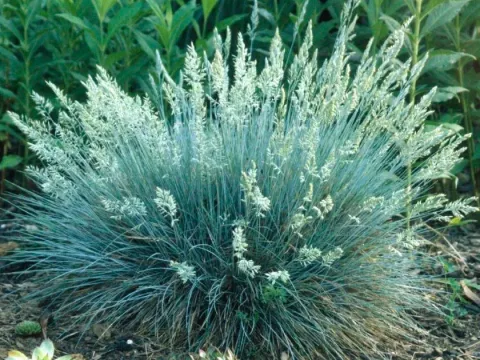
Taurian fescue
Festuca taurica
Taurian fescue (Festuca taurica) belongs to the Poaceae family. It is a perennial herbaceous grass naturally adapted to the harsh conditions of steppe and semi-arid environments, making it a valuable forage resource.
What the section contains
Taurian fescue
The plant exhibits high drought tolerance and salt tolerance, which makes it an excellent choice for cultivating on poor, rocky, or saline soils where traditional cereal grasses fail to thrive.
Botanically, it features a dense, clump-forming growth habit with narrow leaves that minimize water loss through transpiration, ensuring survival during intense summer heat.
It prefers well-drained, calcareous soils and is characterized by its winter hardiness, allowing it to withstand significant temperature fluctuations in its natural range.
Optimal growth is achieved in open, sunny locations with moderate moisture during the spring phase. Its root system is exceptionally efficient at moisture uptake, which is a key trait for arid-zone agriculture.
The primary economic value of Taurian fescue lies in its use as a grazing grass and for hay production. Livestock readily consume the biomass, which provides essential fiber and protein when managed correctly.
In pasture settings, it demonstrates great resilience to grazing pressure, helping to maintain stable ground cover and prevent soil compaction and erosion in hilly or marginal landscapes.
For optimal forage quality, it is recommended to harvest the grass before full flowering. This timing ensures a balance between high dry matter yield and peak nutritional value for cattle and sheep.
Beyond its feed potential, the species is widely recognized for its soil-stabilizing properties. Its ability to create a deep, fibrous root mass contributes to the restoration of degraded terrains.
Given its longevity and low maintenance requirements, Taurian fescue is considered a sustainable component for long-term grassland development in climate-stressed regions.
The main threats to Taurian fescue include cereal rust diseases, which typically appear under conditions of excessive humidity or poor air circulation within the stand.
Pest pressure from cereal flies and aphids can impact plant vigor, especially during the early developmental stages of the stand, potentially requiring integrated pest management strategies.
To minimize disease outbreaks, it is crucial to ensure correct planting density, which promotes airflow and reduces microclimate humidity that favors fungal growth.
Competition from aggressive weeds is the most significant challenge during the establishment year. Early weed control is necessary to allow the fescue seedlings to develop strong root systems.
Regular field scouting allows producers to identify potential infestations or disease symptoms early, ensuring the long-term health and productivity of the perennial forage stand.