
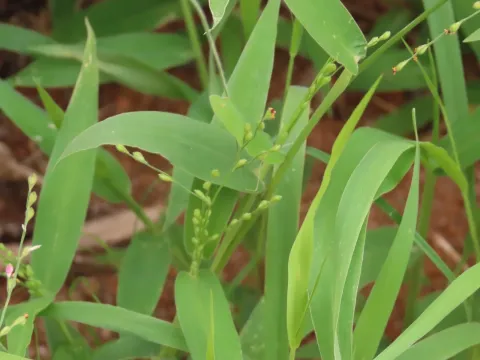
Urochloa deflexa
Urochloa deflexa
Urochloa deflexa belongs to the Poaceae family. In its native African range, planting is typically initiated at the beginning of the rainy season to leverage natural soil moisture for germination.
What the section contains
Urochloa deflexa
The optimal planting temperature is between 20 and 25 degrees Celsius. Seeds are small and should be sown shallowly, ensuring they remain in contact with damp soil without being buried too deep to emerge successfully.
Farmers often use broadcast sowing or manual drilling techniques, depending on the scale of the operation and available agricultural machinery.
Preparing a clean seedbed is a crucial initial step, as young seedlings of Urochloa are relatively slow to establish and can be easily outcompeted by aggressive weed species.
Post-emergence care involves weeding and ensuring adequate spacing, which promotes robust tillering and increases the overall biomass production of the plant.
This species is highly regarded for its xerophytic nature, making it exceptionally resilient to drought and extended dry spells common in the Sahel and tropical regions.
It performs best on sandy to loamy soil types that provide excellent drainage, though it shows remarkable adaptability to various soil structures provided they are not waterlogged.
As a sun-loving plant, it requires full exposure to sunlight to reach its maximum productivity; any degree of shading significantly stunts growth and reduces leaf yield.
The optimal temperature range for active growth is 25 to 35 degrees Celsius, with the plant displaying excellent recovery rates after short-term heat stress.
While the plant does not have high fertilizer requirements, a modest application of nitrogenous fertilizer during the early vegetative stage can double the biomass growth rate.
The yield of Urochloa deflexa is primarily influenced by the total rainfall distribution and the inherent fertility of the soil during the peak growing season.
As a forage crop, it provides substantial green matter that is highly palatable for both cattle and small ruminants, making it a reliable feed source during dry periods.
When cultivated for grain, the crop yields are consistent, often proving more stable than other traditional cereal crops in harsh, low-input agricultural environments.
- Green forage yields are maximized by harvesting during the pre-flowering stage.
- Grain yields can be protected through early sowing to avoid late-season drought.
Managing the density of the planting is key to achieving maximum yield per hectare, as it prevents intra-specific competition for vital nutrients.
The crop is susceptible to common fungal pathogens, particularly rust and smut diseases, which can become prevalent during periods of high humidity and poor airflow.
Insect pests, especially grasshoppers and certain moth larvae, can cause significant damage to the foliage, necessitating vigilant monitoring during the growth cycle.
Root rot is a potential threat if the soil structure does not allow for efficient drainage, leading to water accumulation around the crown of the plant.
Bird damage is a major concern during the grain-filling stage; farmers often employ bird-scaring devices or protective nets in smaller plots to mitigate loss.
Integrated pest management strategies, such as crop rotation and timely field clearing, are recommended to maintain healthy crops and reduce pathogen buildup.
Grain harvest occurs when the panicles turn a light straw color and the seeds reach maturity, typically signaled by a hardened texture of the grains.
For forage, harvesting should take place before the stems become overly lignified, ensuring the highest nutritional value and digestibility for livestock.
In traditional settings, the harvest is performed manually by cutting the stalks and drying them in the field to reduce moisture content before threshing.
Proper drying is essential to prevent mold growth during storage, which is particularly important in humid climates where the risk of spoilage is high.
The final product should be stored in ventilated containers or dry granaries to protect against moisture, insects, and rodents for long-term supply.