
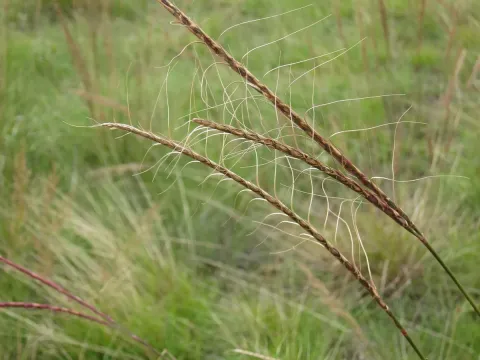
Urelytrum
Urelytrum
Urelytrum is a genus of perennial grasses belonging to the Poaceae family. These plants are primarily native to the tropical and subtropical regions of Africa, where they play a vital role in savanna ecosystems.
What the section contains

Urelytrum
The plant is highly resilient and adapted to thrive in warm climates. It generally prefers well-drained, sandy or loamy soils, which are typical for its native habitat. It shows remarkable tolerance to extended dry seasons, making it a robust candidate for pastoral landscapes.
Botanically, Urelytrum is characterized by a dense tufted growth habit and sturdy, fibrous stems. The leaves are typically stiff and narrow, adapted to minimize transpiration, which is a common survival strategy for grasses in harsh sunlight.
Climatic requirements are specific to high-temperature zones with a clear distinction between wet and dry periods. It requires consistent sunlight and does not tolerate waterlogged soil conditions, which can lead to root degradation.
Agrotechnical management involves careful pasture rotation. Since the grass is slow to establish in the early stages, ensuring it has enough space from competing weeds is crucial for its long-term survival and productivity.
The primary economic use of Urelytrum is as a source of forage for livestock. It provides a reliable food source in pastures, especially during times of the year when more sensitive forage plants go dormant.
Yield capacity is largely dependent on soil fertility and the frequency of rainfall. When managed correctly, Urelytrum stands can remain productive for several years, providing high-quality biomass for grazing ruminants.
Beyond its feed value, the grass serves an important environmental purpose by stabilizing soil structures. Its extensive root system acts as a natural barrier against soil erosion in areas prone to wind or surface water runoff.
The nutritional profile of Urelytrum is best utilized during the early growth phases. While the stems become tougher with age, the nutritional content remains sufficient for supporting cattle and small ruminants in extensive farming systems.
Future research is focused on optimizing the harvesting timing to ensure the highest protein content while maintaining the longevity of the perennial stands. Integrating this grass into sustainable farming practices is essential for soil health.
Like many tropical grasses, Urelytrum is susceptible to various fungal pathogens, particularly rusts that affect the foliage. These diseases are more prevalent during periods of high humidity and can limit the biomass yield.
Insect pests, such as grasshoppers and various stem-boring larvae, can cause significant damage to the plant tissue. Controlling these pests requires sustainable integrated management practices to keep populations below economic thresholds.
Overgrazing poses the greatest threat to the population of this grass. When animals feed too intensely, the root reserves are depleted, preventing the plant from recovering efficiently after a grazing event.
Weed competition during the establishment phase is another major challenge. Young plants need careful monitoring to ensure that invasive weeds do not overtake the site before the grass has established a dense, competitive root mat.
Managing soil moisture is key to preventing root-related pathogens. By ensuring proper site selection and avoiding areas that collect standing water, farmers can significantly reduce the risk of disease outbreaks.